

NPCS has been helping entrepreneurs, startups, MSMEs, and industrial investors since 1992 with detailed project reports, feasibility studies, market research, and business consulting services across 50+ industries.
Housing schemes, metro expansions, industrial corridors, and highway projects all pull the same lever: demand for cement products, tiles, bricks, sanitaryware, paints, and structural steel. A new entrant does not need to compete with the largest players on day one. Smaller, focused manufacturing setups are winning local and regional business by solving supply gaps that big brands leave open. This article walks through why the sector works, what government support looks like, where the growth numbers point, and how a first-time entrepreneur can size up the opportunity before committing capital.
Construction material demand does not follow fashion cycles. It follows population growth, urban migration, and government infrastructure spending, all of which are on a steady upward curve in India. That gives manufacturers a demand base that is far more predictable than most consumer categories.
Margins in this space depend heavily on how close a unit sits to raw material and to its market. A brick or block manufacturing unit near a growing township, for instance, saves massively on freight compared to a distant competitor, and freight is one of the biggest cost heads in building materials. Local proximity becomes a genuine competitive edge, not just a convenience.
Timing also favours new entrants. Tier 2 and Tier 3 cities are seeing construction activity that their local supply chains cannot yet fully serve. A well-placed manufacturing unit for tiles, paints, or precast concrete products can capture that gap before larger players extend their distribution there. Profitability, in this sector, often comes down to being early and being local, more than being the biggest.
Policy support for this sector is broader than most entrepreneurs realise. The Production Linked Incentive scheme for specialty steel directly benefits manufacturers feeding structural and construction-grade steel into building projects, rewarding investment in higher-value steel products rather than plain commodity output.
MSME-focused schemes matter even more for smaller entrants. The Credit Linked Capital Subsidy Scheme (CLCSS) subsidises technology upgradation for eligible units, while the Prime Minister's Employment Generation Programme (PMEGP) offers margin money support for new micro and small manufacturing ventures, including several building material categories.
Startup India registration brings tax benefits and easier compliance for eligible new manufacturing ventures, and several state governments run their own industrial subsidy packages, covering land allotment, power tariff concessions, and stamp duty waivers for units set up in designated industrial areas. GST input credit on machinery and raw material purchases further improves working capital efficiency once the unit is operational.
India's construction sector growth is running well ahead of overall GDP growth in most recent years, driven by government capital expenditure on infrastructure and a private housing cycle that has picked up pace after a long lull. This dual push, public infrastructure plus private housing, is what makes the demand curve for building materials unusually durable.
Affordable housing missions continue to add volume at the lower end of the market, while premium residential and commercial construction is pushing demand for higher-specification materials such as vitrified tiles, engineered stone, and low-VOC paints. As a result, manufacturers who can serve both ends, budget and premium, are best positioned to ride out demand fluctuations in any single segment.
Urbanisation is the structural driver underneath all of this. As more of India's population moves into cities and towns, per-capita consumption of cement, steel, and finishing materials rises sharply compared to rural construction patterns. That single trend supports steady industry growth over the next decade, regardless of short-term project delays or interest rate cycles.
Projecting forward to 2032, India's building materials market is on track for sustained expansion, assuming infrastructure spending and housing demand continue on their current trajectory. For this forecast, we are assuming a base-year market size in the broad building materials category and applying an estimated CAGR of 8 to 9 percent, a range consistent with recent construction sector growth trends. Readers should treat this CAGR as an assumption for planning purposes, not a guaranteed figure, and adjust it against their own segment-specific research.
At an 8 to 9 percent CAGR, the market would roughly double in size between now and 2032, with cement-based products, ceramic tiles, and structural steel likely to remain the largest volume categories. Faster growth is expected in newer segments such as precast concrete, green building materials, and engineered wood substitutes, as sustainability requirements in commercial construction tighten.
For a new manufacturer, this forecast matters less as a headline number and more as a planning tool. It signals that capacity built today has a demand runway extending well past a decade, which supports longer repayment schedules on machinery loans and justifies investment in slightly higher automation levels than a short-term opportunity would warrant.
India already exports a meaningful volume of ceramic tiles, granite and natural stone products, and certain categories of sanitaryware, with buyers across the Middle East, Africa, and parts of Europe. Gujarat's tile clusters and Rajasthan's stone processing units are established examples of regional manufacturing hubs that built export businesses on the back of domestic scale.
On the import side, India still brings in significant volumes of specialised construction chemicals, certain grades of glass, and high-end sanitaryware fittings, largely because domestic manufacturing capacity in these niche categories has not caught up with demand. That gap is itself a business idea: import-substitution manufacturing in these underserved categories can command better margins than commodity products, precisely because competition is thinner.
New entrants targeting export markets should start with product categories that already have established buyer networks, such as tiles or natural stone, rather than trying to build an export relationship from scratch in an unfamiliar category. Export incentives under schemes like the Remission of Duties and Taxes on Exported Products (RoDTEP) also improve the economics for manufacturers who structure their operations for export from the outset.
Sustainability is reshaping the building materials industry faster than most entrepreneurs expect. Fly ash bricks, autoclaved aerated concrete (AAC) blocks, and recycled aggregate products are moving from niche to mainstream as green building certifications become a purchase criterion for commercial developers. Manufacturers who position early in these categories avoid competing purely on price.
Smart and prefabricated construction is another growth lane. Precast concrete components and modular building systems reduce on-site construction time, and large developers are increasingly specifying them for speed and quality control. A manufacturing unit built around precast components today is positioning itself ahead of a construction method that is still gaining adoption in India.
Finally, the sheer geographic spread of India's construction activity means demand is not concentrated in one or two metro clusters. Tier 2 and Tier 3 markets, rural housing programmes, and industrial park development all create pockets of localised demand that a regional manufacturer can serve profitably without competing head-on with national brands.
The figures below give a working sense of scale, indicative investment ranges, and the 2032 forecast trajectory. Treat exact numbers as planning assumptions to be refined with current quotations from machinery suppliers and updated market data.
|
Parameter |
Current Indicative Range |
2032 Forecast / Outlook |
|
Overall building materials market |
Multi-billion dollar base (assumed) |
Roughly doubling at 8-9% CAGR |
|
Fly ash brick / AAC block unit |
INR 50 lakh - 2 crore project cost |
Rising share of green-certified construction |
|
Ceramic / vitrified tile unit (small-mid scale) |
INR 2-8 crore project cost |
Steady export growth, premium segment expansion |
|
Precast concrete components unit |
INR 1-5 crore project cost |
Fastest-growing sub-segment to 2032 |
|
Construction chemicals unit |
INR 30 lakh - 1.5 crore project cost |
Import-substitution opportunity widens |
|
Typical payback period (well-run unit) |
3-5 years |
Improves with automation and export mix |
Fly ash brick and concrete block manufacturing typically need the lowest starting investment among building material categories, and machinery is widely available from domestic suppliers, which also keeps after-sales support simple.
Not necessarily. Brick, block, and tile units can start on a modest industrial plot, though products like precast concrete or aggregate processing need more open yard space for curing and storage.
Yes, but it is easier in categories like tiles or natural stone where India already has an established buyer base abroad. New entrants usually build a domestic customer base first, then add export orders once quality and capacity are proven.
Most well-managed units break even within 3 to 5 years, depending on capacity utilisation, local demand, and how quickly the unit builds a stable dealer or contractor network.
It varies by scheme and state, but CLCSS and PMEGP support, combined with state capital subsidies, can meaningfully lower the effective project cost for eligible MSME units. Exact benefit depends on category, location, and investment size.
Green and sustainable materials, including AAC blocks and precast concrete, currently show the strongest structural tailwinds, since green building norms are becoming standard requirements rather than optional add-ons in commercial projects.
Construction and building materials manufacturing is not a flashy business idea, but it is a durable one, anchored to a construction boom that has years of runway left. The combination of steady domestic demand, active government incentive schemes, and a genuine export opportunity in select categories makes this sector worth serious evaluation for any entrepreneur weighing manufacturing options right now.
The entry point does not have to be large. A focused unit in fly ash bricks, tiles, or precast components, placed close to an active construction corridor, can build a profitable business without competing directly against national-scale manufacturers. What matters most is picking a segment, verifying local demand and machinery costs with current quotations, and moving before nearby supply gaps close.
Please choose a project below related to this category.

The global demand for specialized uniforms has been on a steady rise, driven by workplace safety regulations, corporate branding trends, and the expan...
|
Capacity : FR Uniform: 310 Pcs Per Day ARC Flash: 310 Pcs Per Day Corporate & Hospitality: 310 Pcs Per Day |
Plant and Machinery cost: 12500 |
|
Working Capital : N/A |
Rate of Return (ROR): 46 |
|
Break Even Point (BEP): 32 |
TCI :
|
|
Cost of Project : 15600 |
Tempered glass, or toughened glass, is in high demand in building construction, automotive industries, and the interiors sector. Its strength, safety,...
|
Capacity : 4,000 Sq.Ft. Per Day |
Plant and Machinery cost: 277 |
|
Working Capital : N/A |
Rate of Return (ROR): 27 |
|
Break Even Point (BEP): 43 |
TCI :
|
|
Cost of Project : 1082 |
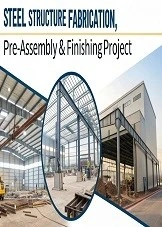
The industrial steel structure fabrication industry is direct at the intersection of building our cities and fuelling our industrialization. It is a h...
|
Capacity : PEB Components, Crash Barriers, Transmission Towers, Steel Gates, Grills & Railings: All 500 MTPD. |
Plant and Machinery cost: 1500 |
|
Working Capital : N/A |
Rate of Return (ROR): 35 |
|
Break Even Point (BEP): 39 |
TCI :
|
|
Cost of Project : 18700 |
Steel Hinges and Tower Bolts Manufacturing Business. Production of Door Hardware & Accessories. Builder's Hardware Industry Hinges are ideal for self...
|
Capacity : - |
Plant and Machinery cost: - |
|
Working Capital : - |
Rate of Return (ROR): 1.00 |
|
Break Even Point (BEP): 0.00 |
TCI : - |
|
Cost of Project : 0 |
TMT Steel Bar (Saria/Rod) Manufacturing Industry. Production of TMT Rebars (Reinforced Bars), TMT Rods. TMT Steel TMT bars or Thermo-Mechanically Tr...
|
Capacity : - |
Plant and Machinery cost: - |
|
Working Capital : - |
Rate of Return (ROR): 1.00 |
|
Break Even Point (BEP): 0.00 |
TCI : - |
|
Cost of Project : 0 |
Hinges are devices that are made out of two symmetrical or none symmetrical sheet metal pieces pivot joined together with wire rod for free swinging o...
|
Capacity : Steel Hinges: 540 MT/Annum Steel Tower Bolts: 540 MT/Annum |
Plant and Machinery cost: Rs 78 lakhs |
|
Working Capital : - |
Rate of Return (ROR): 28.00 |
|
Break Even Point (BEP): 55.00 |
TCI : Cost of Project : Rs 261 lakhs |
|
Cost of Project : 26100000 |
Latex paint is easier to work with and dries more quickly, but it isn't quite as durable as oil-based paint. Latex is good for general painting projec...
|
Capacity : - |
Plant and Machinery cost: - |
|
Working Capital : - |
Rate of Return (ROR): 1.00 |
|
Break Even Point (BEP): 0.00 |
TCI : - |
|
Cost of Project : 0 |
Calcium Silicate Blocks and Pipes Manufacturing Industry. Insulation Materials. Production of Calcium Silicate Pipe & Block Insulation Calcium Silica...
|
Capacity : - |
Plant and Machinery cost: - |
|
Working Capital : - |
Rate of Return (ROR): 1.00 |
|
Break Even Point (BEP): 0.00 |
TCI : - |
|
Cost of Project : 0 |
Ceramic sanitary wares are plumbing fixtures which comprise wash basins, shower plates, toilet bowls, bath tubs, etc. Ceramic sanitary ware products a...
|
Capacity : - |
Plant and Machinery cost: - |
|
Working Capital : - |
Rate of Return (ROR): 1.00 |
|
Break Even Point (BEP): 0.00 |
TCI : - |
|
Cost of Project : 0 |
Discontinuous Sandwich Panel Production. Sandwich Panel Manufacturing Business Sandwich panels (sometimes referred to as composite panels or structur...
|
Capacity : - |
Plant and Machinery cost: - |
|
Working Capital : - |
Rate of Return (ROR): 1.00 |
|
Break Even Point (BEP): 0.00 |
TCI : - |
|
Cost of Project : 0 |
Wire binding is a popular commercial book binding method, and is known by a number of different names including twin loop wire, wire-o, double loop wi...
|
Capacity : - |
Plant and Machinery cost: - |
|
Working Capital : - |
Rate of Return (ROR): 1.00 |
|
Break Even Point (BEP): 0.00 |
TCI : - |
|
Cost of Project : 0 |
Ramming Mass is used in the lining of induction furnaces. Quality of Acidic Ramming mass is directly related to the heating performance of the furnace...
|
Capacity : - |
Plant and Machinery cost: - |
|
Working Capital : - |
Rate of Return (ROR): 1.00 |
|
Break Even Point (BEP): 0.00 |
TCI : - |
|
Cost of Project : 0 |

Entrepreneur India, an Industrial monthly magazine on industrial development, technologies & project opportunities aims at simplifying the process of choosing the suitable project for investment.

Entrepreneur India - Copyright 2017-. All rights reserved.



