





Introduction: Waste to Wealth Business Ideas in India
The entire waste management system in India has experienced a complete transformation. Businesses now discover new revenue streams from materials that previously had no value. This shift is driven by the burgeoning concept of the circular economy, in which products and materials are reused instead of being discarded. Businesses all over the country are realizing that there is money to be made with waste, if you have the technology and the plan.
Every year India produces millions of tonnes of waste as a result of households, industries, farms and construction activities. A huge chunk of this waste is left unprocessed which presents an environmental challenge as well as an economic opportunity. Entrepreneurs that know this opportunity are coming into the waste-to-wealth arena and building businesses that are sustainable and financially rewarding.
The demand for recycled materials is multiplying due to the pressure companies are facing to minimise the impact on the environment. Governments are also driving recycling and waste management businesses through policies and financial support. The waste to wealth industry has become one of the fastest growing sectors in the Indian economy.
Table of Contents
ToggleGet Detailed Insights from This Book: Modern Technology of Agro Processing & Agricultural Waste Products
Understanding The Circular Economy And The Business Potential
The circular economy exists to extend resource usage throughout the entire resource lifecycle. The system processes products through three methods which include repairing them and recycling their components and using their materials to produce new items. This approach results in less waste, less use of natural resources and creates new business opportunities.
The circular economy exists to transform waste into new primary materials. Many industries are already transitioning to this model because it reduces production costs while enhancing environmental sustainability. Entrepreneurs benefit from this situation because they get access to low-cost primary materials while the recycled goods market continues to expand.
The main advantages of circular economy businesses include:
- Low raw material cost
- Continuous market demand
- The government support and subsidies
- Environmental sustainability
- Long-term business stability
New entrepreneurs and seasoned investors find waste-based businesses attractive because these enterprises provide them multiple advantages.
Upcycled Fashion and Textile Recycling Business
The textile industry produces excessive fabric waste which it generates as a natural result of its production activities. Businesses can recycle these materials into new products like clothing and bags and home decor items instead of disposing them at extremely low rates. Upcycling has become popular among consumers who choose to purchase sustainable products.
Small businesses can operate this company because its operations do not require any advanced equipment nor its facilities need substantial industrial space. A small workshop with sewing machines and skilled workers and can use the leftover fabric to create high-quality products. Many startups have successfully established brands which focus on creating innovative designs that use environmentally friendly materials.
Some of the popular products made from textile waste are:
- Handbags and backpacks
- Cushion covers and curtains
- Quilts and blankets
- Fashion accessories
- Reusable shopping bags
The demand for sustainable fashion is on the rise not only in India but also internationally which makes this business a strong long-term opportunity.
Access Complete Business Plan: Waste to Wealth-Value Recovery from Agricultural and Industrial Biomass Residues
Plastic Recycling Business: A Steady and Growing Business
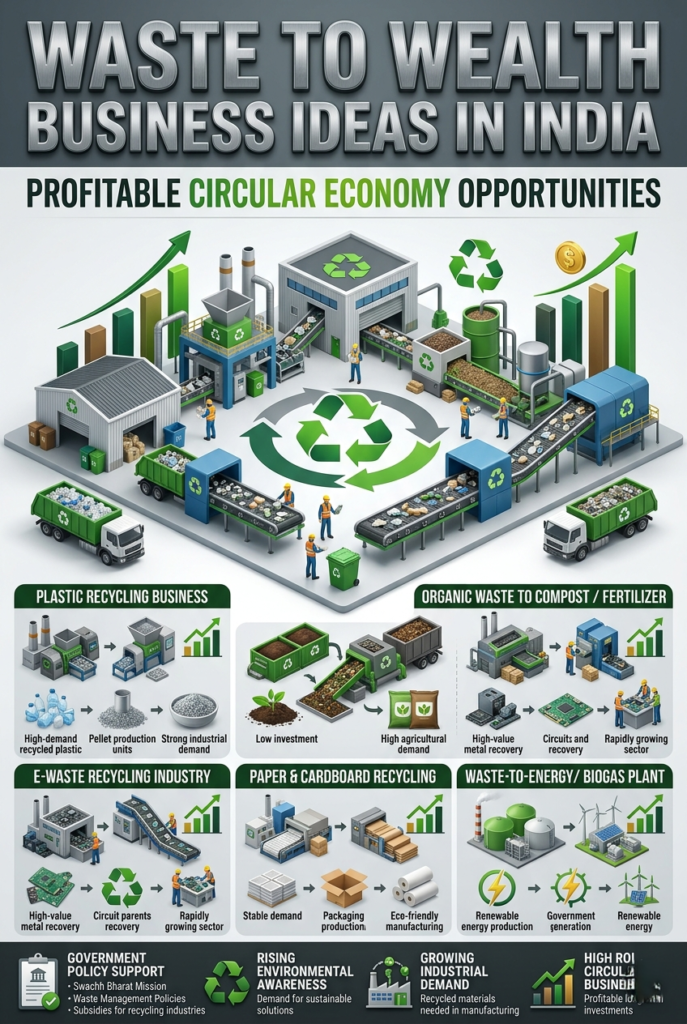
One of the most established waste-to-wealth businesses in India is plastic recycling. With more and more concerns about pollution, governments and companies are actively promoting recycling solutions. The recycled plastic market has developed into a reliable market existence.
The process of plastic recycling starts with waste plastic collection followed by plastic cleaning and conversion into reusable granules or fibbers. The materials are then distributed to manufacturers who incorporate them into their various product lines. The demand for recycled plastic will rise because environmental regulations are becoming stricter.
Plastic recycling businesses benefit from a number of important factors:
- High availability of raw material
- Constant demand from manufacturers
- supportive government policies
- Growing awareness about environmental protection
The combination of these factors makes plastic recycling one of the safest and most profitable business opportunities within the waste recycling industry.
E-Waste Recycling: Big Business Opportunity
Electronic waste continues to grow rapidly because people use smartphones and computers along with home appliances. Many of these devices contain valuable metals which can be recovered and reused. E-waste recycling businesses concentrate on extracting these materials and then selling them to manufacturers.
This sector is said to be very profitable as the metals recovered have a high market value. As technology continues to advance, the amount of electronic waste will continue to grow and there will be a consistent supply of raw materials for recycling companies.
Some useful materials that can be retrieved from e-waste include:
- Copper
- Aluminum
- Gold
- Silver
- Plastic components
Although this is a business that requires proper licensing and technical knowledge it has a great potential for growth and profitability over a long period of time.
Biomass Briquette Making: Converting Agricultural Waste Into Energy
Agricultural waste is abundantly available in rural areas and a lot of it is burned after harvest. This practice is pollution and a waste of valuable resources. Biomass briquette making offers a solution by converting crop residue into industry fuel.
Industries are increasingly switching to biomass fuel as it is cleaner and more environmentally friendly than coal. This change is creating fresh chances for entrepreneurs to develop their businesses in rural and semi-urban territories.
Common raw materials to use in this business include:
- Paddy straw
- Sugarcane bagasse
- Groundnut shells
- Mustard husk
- Sawdust
The business generates stable revenue through effective planning and supply chain management while it contributes to environmental conservation efforts.
Construction Waste Recycling: Helping Build a City
Construction and demolition works produce waste materials, such as concrete, brick and sand, in the range of tons. Instead of sending this waste to landfills, the recycling companies can recycle them into reusable construction materials. These recycled materials are used in large amounts for road construction and infrastructure projects.
Government policies are promoting the use of recycled materials for construction, which is driving demand for recycling services. With cities continuing to expand, there is going to be a significant increase in the need for construction waste management.
This is a suitable business especially in areas with rapid urban development where there is high construction activity and the generation of wastes is ongoing.
Why Waste to Wealth Businesses Is the Future
Waste-to-wealth businesses are becoming increasingly popular because they address two of the biggest issues simultaneously; waste management and resource scarcity. As populations expand and natural resources become scarce, the process of recycling and reuse will become integral to the economy.
Several trends are contributing to the growth in this sector:
- Increasing generation of wastes
- Rising environmental awareness
- Government regulations on waste management
- Growth of recycling industries
- Demand for sustainable products
These trends suggest that the waste-to-wealth industry will continue to expand in the years ahead, and will open new opportunities for entrepreneurs.
Related Article: Top 6 High Profit Manufacturing Business Ideas in India (2026)
Conclusion: A Bright Business Opportunity for the Next Decade
The waste-to-wealth sector provides Indian entrepreneurs with their most promising business opportunity. The combination centers on environmental responsibility while offering substantial financial benefits. The businesses in this sector operate with three advantages which include inexpensive raw materials and increasing market demand and government assistance.
Entrepreneurs who begin early in this industry can establish viable businesses and achieve long-term success. Our future economic system will rely on recycling and upcycling businesses because more people learn about sustainable practices.
Frequently Asked Questions (F.A.Q.)
Q1. Is the waste to wealth business profitable?
Yes, waste-to-wealth businesses are profitable because the cost of raw materials are low and the demand for recycled products are high. Many companies in this industry get a stable profit margin once they set up.
Q2. Which is the Best Waste Business for Beginners?
For the beginners, businesses like textile recycling, paper recycling, and plastic recycling are usually easier to start as these require moderate investment and simple technology.
Q3. How much investment requires to start a recycling business?
The investment required for a business depends on its total operational size and the type of business activities it conducts. Small-scale recycling units require an investment of several lakh rupees to establish whereas industrial projects demand greater capital investment.
Q4. Do recycling businesses require a license?
Yes most of the recycling businesses need to be registered and approved by the local authorities or pollution control boards. The exact requirements depend upon the type of waste being processed.
Q5. Is there an increasing demand for recycling businesses?
Yes, demand is growing because of population growth and the environment and government regulations favouring sustainable practices.


