







Digital Finance 2026
Power always attracts money. The control of financial services is also moving towards digital platforms, decentralised systems and AI tools, with even more of it going directly to individuals and businesses in 2026. As Google search engines are flooded with these inquiries, it’s clear that digital banking services, investment platforms, updates about cryptocurrency, and financial planning tools are the top concerns. Don’t limit people’s curiosity to just being curious. They’re working hard to take action.
This is not a trickle-down thing. Now, the World Bank Global Financial Inclusion Index reinforces the fact that digital financial services have expanded access to banking and investment to hundreds of millions of individuals who were previously unbanked. The implications are massive for businesses and investors in all markets.
Check Out This Recommended Book: Profitable Small Scale Industries- Money making Business Ideas for Startup
The Death of the Branch and the Rise of the Digital-First Bank
According to the Statista’s Digital Banking Report 2025, in developed markets more than 78 percent of retail banking customers now use mobile apps or web platforms to mostly handle their banking. It’s even more pronounced with customers under 40 – fewer than 8% use their physical branches when accessing the bank.
Neobanks and challenger banks can now provide the entire suite of financial services traditionally provided by traditional banks—including savings accounts with high-yield rates, loans for both individuals and businesses, international transfers at low costs, investment products, insurance, and even payroll services.
Related Article: 67% of MSMEs Are Now Digital-Ready: A Practical Digitisation Roadmap and Business Ideas for Factory Owners
Investment Platforms: Democratising Wealth Building
The dramatic change in the ease of access to retail investing is captured in the SEC’s 2024 Annual Report on Retail Investor Participation. What even seasoned advisors find hard to do regularly is now easier (or even possible) with AI-powered investment tools that analyse thousands of data points at once, rebalance portfolios in real time, model multiple future scenarios and personalise investment recommendations according to each investor’s risk tolerance and financial objectives.
Robo-advisories have come a long way from the index fund allocation. Goal-based planning that adapts to life changes, dynamic allocation strategies that react to macroeconomic shifts, and automatic tax-loss harvesting.
Cryptocurrency in 2026: Beyond the Hype Cycle
Crypto as an asset class has seen significant changes, well-documented by CoinDesk’s annual State of Crypto report. The market has experienced turbulent cycles of correction throughout Q1’s in the 2020’s and has now transformed into a far more institutionalized asset class. Following the 2020’s turbulent cycles of correction Crypto has begun to transform itself into a fully institutionaled asset class, with pension funds, sovereign wealth funds and even insurance companies already invested in Bitcoin and Ethereum. With the increased breadth of the Bitcoin ETF market now trading it offers regulated access without self-custody management.
Stablecoin rails have become a surprisingly viable offering for businesses for cross-border payments. The BIS Quarterly Review on Stablecoin Adoption illustrates how international companies are transferring money from one market to another in minutes instead of days, often at less than traditional wire transfer fees.
Financial Planning Tools: The AI Advisor in Your Pocket
Today’s generation of financial planning apps is more than just budgeting. AI Cash Flow Forecasting, a capability previously performed in spreadsheet models, is now performed by systems that can analyse historic trends, take into account seasonality, and generate forecasts of cash flow for the next 30-60-90 days with uncanny accuracy. This one function alone has made a huge difference in the real world for small businesses with cash timing mismatches.
The Rise of Embedded Finance
A transaction, now a transformation of how business is done – and for that, you can thank embedded finance. An innovation tipped by Accenture in Embedded Finance Opportunity Report to reach $7 trillion by 2030; The Embedded Finance Opportunity Report points that embedded finance offers fluid, context dependent experience where products or services are transacted on an e-commerce site where financing can be provided at the point-of-sale (POS) instead of diverting the customer away from the site towards a bank.
Get Detailed Project Report (DPR): DPR Consultant in India – Detailed Project Report Consultants & Consultancy Services
Key Risks Every Investor and Business Owner Must Understand
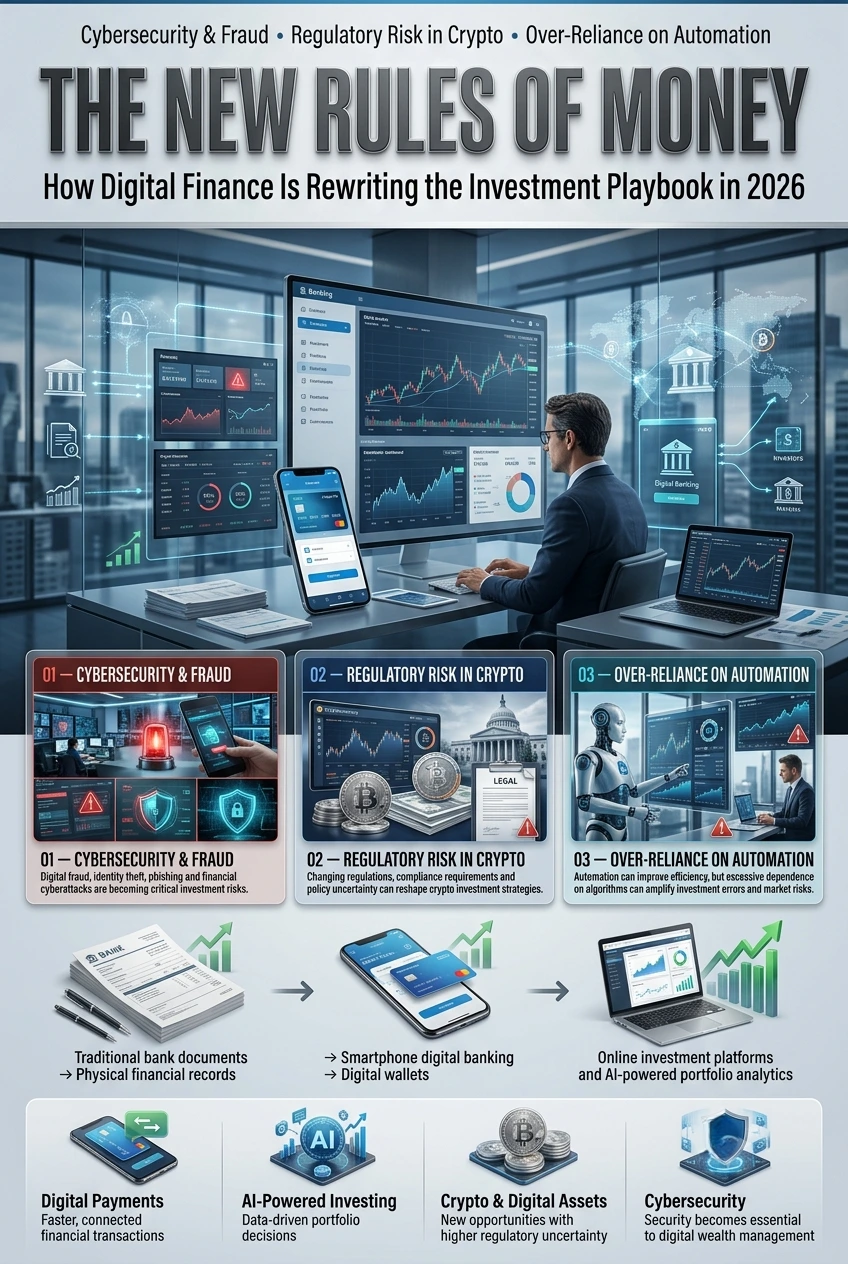
Cybersecurity and Fraud
As digital financial services grow, so do financial fraud, which has been a consistent trend in FBI Internet Crime Complaint Center (IC3) Annual Reports, including fraudulent transactions, account takeovers, and phishing attacks on digital banking credentials. Multi-Factor Authentication, robust unique passwords and careful links with financial items are hygiene level requirements.
Regulatory Risk in Crypto
Most of the major markets are still grappling with the regulatory landscape associated with cryptocurrency. Regulatory changes may impact the worth, usability, and legality of certain assets and platforms.
Over-Reliance on Automation
While AI financial tools are powerful, they’re not perfect. Automated advice may not be suitable in unusual situations, during significant life changes or if it is influenced by black swan market events. The human element is still a crucial part of any financial decision-making process.
What Smart Investors Are Prioritising Right Now
Disciplined diversification, using tax-efficient accounts, and long-term horizon investment strategies are the most consistent methods that have helped people build their wealth regardless of market conditions, according to the CFA Institute’s Global Investment Performance Standards and Investor Survey 2025, both of which were published by the CFA Institute.Disciplined diversification, using tax-efficient accounts, and long-term horizon investment strategies are the most consistent methods that have helped people build their wealth regardless of market conditions, both of which were published by the CFA Institute in the CFA Institute’s Global Investment Performance Standards and Investor Survey 2025.
- The diversity of asset classes and geographies continues to be the best form of risk management.
- Tax efficiency is gaining more importance in a more and more complex tax landscape worldwide.
- When it comes to the discipline of saving the three to six months of expenses that comprise the emergency fund, that has become even more significant with the increased volatility of the economy.
- In the age of highly evolved digital fraud, Digital security hygiene is meant to safeguard financial accounts.
Turn your budget into a successful business plan
The Bottom Line for Businesses
As set out in the PwC Global FinTech Report 2025, organisations that don’t assess their financial setup with the digital-first mindset are missing out on significant efficiency improvements and cost savings. Today’s digital tools offer a competitive edge to the old financial systems in areas such as banking, payments, cash flow analysis and financial planning.
Closing Thoughts
The financial landscape of 2026 is far more accessible, more intelligent and more interconnected than the past. Stay informed, stay engaged – it’s the most important financial decision you can make. New rules of money are being written now. The key to benefiting from them is to understand them.
References & Further Reading
- World Bank — Global Financial Inclusion Index
- Statista — Digital Banking Report 2025
- Bank for International Settlements — Stablecoin Adoption Quarterly Review
- Forrester — Financial Technology Landscape Report
- PwC — Global FinTech Report 2025


