





Agriculture is among the foremost in a long list of factors that have assisted humans to secure food and stabilize economies. Being a modern concept, advanced technology like Precision Agriculture has greatly changed the operations in these domains. This article shall observe how IoT is injecting precision into agriculture and how this real-time data integrates into yield maximization.
Understanding Precision Agriculture
Precision agriculture, or smart farming, as a technological modern farming practice, is essentially the very precise monitoring and managing of field variability in crop production. Applying only the required amounts of water, fertilizers, pesticides, etc., into definite patches of soil will reduce wastage and optimize productivity. This can only happen when sufficient information has entered the frames of collection, analysis, and automation for the making of accurate decisions.
Essential Elements of Precision Agriculture
- Sensors and actuators are known as manual data collation devices, collecting data on soil moisture, temperature, humidity, and other factors in ambient conditions.
- Drones and satellites use remote sensing for aerial imaging and health monitoring of crops in the field.
- Mapping and GIS: Have a hand in mapping & analyzing the condition of a field.
- Big Data Analytical: Allows for processing the collected data so that it will become actionable.
- Automated Machinery: It includes tractors and irrigation systems controlled by IoT applications.
Also Read: Production of Biodegradable plastic Products
The Role of IoT in Precision Agriculture
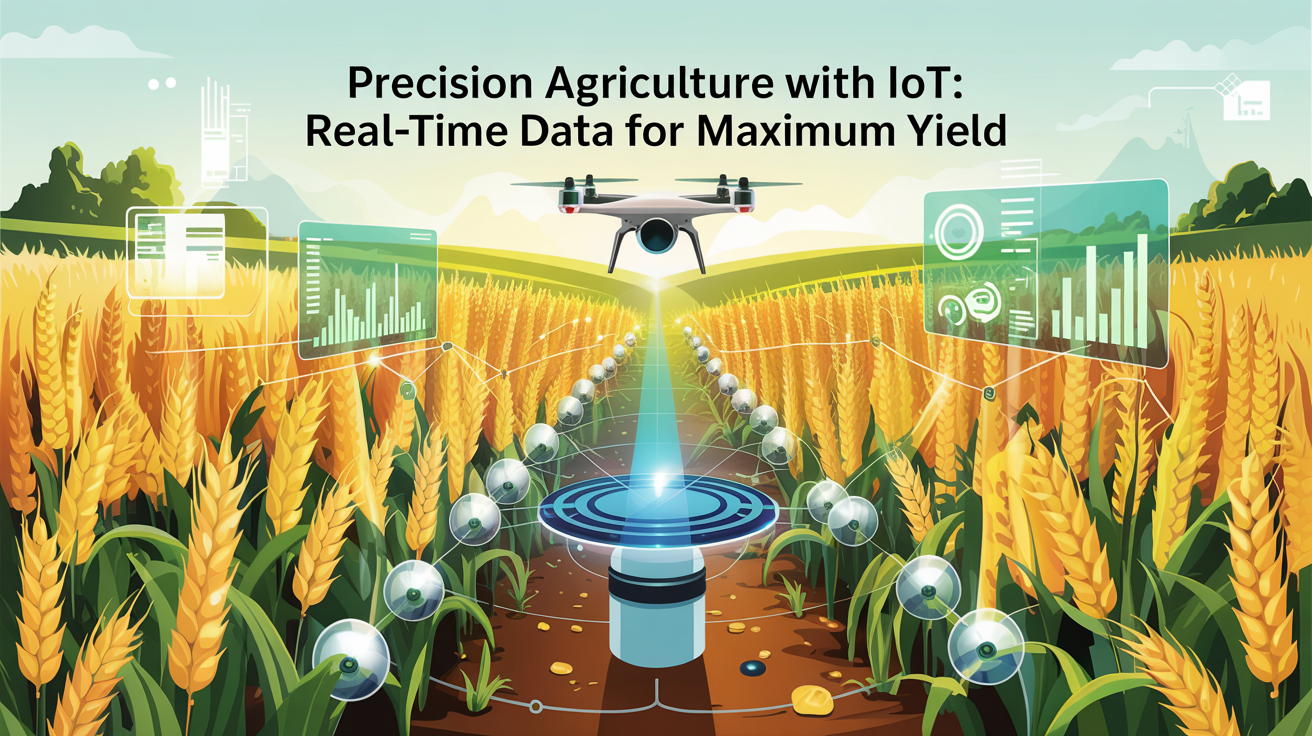
The IoT unites devices, sensors, and systems, permitting simultaneous collection and real-time data analysis to serve precision farming. Interconnectivity allows farmers to make decisions when they should be done and then produce increased production and efficiency.
How Is IoT Applied in Precision Agriculture?
- Data Collection: Soil moisture, temperature, light level, etc., are all gathered by sensors that have been installed in the fields using IoT.
- Transmission of Data: Transferred to cloud-based platforms over wireless networks.
- Data Analysis: The algorithms process the data to provide insights on crop health, irrigation needs, and pest invasion.
- Recommendations: The real-time advice provided to farmers will include resource application, cropping, and harvesting schedules.
- Automation and Control: Irrigation systems, fertilization, and greenhouse control are all done automatically by IoT-based actuators.
For more information: Business Ideas and Investment Opportunities
Real-Time Data and Its Effects on Yield Optimization
Real-time data is an innovative approach to farming that allows a farmer to alter crop growing conditions to enhance yield. Some of these key areas include:
1. Superior Irrigation Management
IoT-based soil moisture sensor systems determine how much water the crops require in precise amounts. This saves over-irrigation, prevents water wastage, and enhances plant attributes. Automated irrigation systems adjust watering schedules depending on real-time weather reports.
2. Pest and Disease Control
IoT-enabled cameras and sensors can detect early warning signals of pest invasion and diseases. In this case, a farmer takes pre-emptive action before the problem to minimize crop loss and cut short pesticide use.
3. Optimized Fertilization
Through IoT sensors, the component of nutrient levels available in soils provides insights into the detailed fertilizers for different crop sections required in right precision for fertilizer application.
4. Meteorological Monitoring and Forecasting
Different parameters related to the weather can be automatically monitored online in real time: humidity, temperature, and rainfall. Thus, it will be useful to farmers in deciding how much more attention they would give to plant husbandry activities, irrigation, or harvest.
5. Plant Health Monitoring
Multispectral imaging mounted drones capture plant health, and the images are used by farmers in the section to identify the areas that require immediate attention.
6. Supply Chain Optimization
Real-time information is basic to the prediction of harvest dates, and it makes logistics as efficient as possible to control losses during storage and transport for farmers.
Visit this Page for More Information: Start a Business in Food Processing and Agriculture Based Industry
Case Studies: IoT Success in Precision Agriculture
Case Study 1
Smart Irrigation in California: Implemented in vineyards in California, smart irrigation based on IoT has its sensors tracking soil moisture and adjusts the watering schedule using real-time data; thus, a reduced water consumption sufficed at 30% less volume and made grapes of superb quality.
Case Study 2
Disease Detection in India: Indian farmers started to use IoT-based pest detection systems that evaluated the health of plants through sensors and AI-based analytics. Farmers had a healthier crop loss, reduced by 25%, and used less pesticide, thus making agriculture sustainable.
Case Study 3
Greenhouse Automation in the Netherlands: These are examples of Dutch greenhouse farms using IoT in their automated climate control systems. Real-time temperature and humidity tracking enabled proper conditions to be maintained, thus generating 40% increased vegetable output at the same time, consuming lesser energy.
Challenges and Solutions in IoT-Based Precision Agriculture
Challenges
- High Initial Investment: Implementation of IoT.
- Cost of IoT Infrastructure: Implementing IoT is generally expensive.
- Connectivity Issues: Rural areas often lack reliable internet access, especially during the cold periods.
- Data Security Issues: Agricultural data continues to face a lack of cybersecurity.
- Skill gap Farmers deserve some technical training for easy management of IoT systems.
Solutions
- Government and the Private Joined Financial Aid: Provision of funds and subsidies will assist farmers in applying IoT technology.
- Deployment of 5G: Network infrastructure extensions will ensure connectivity in the most remote areas.
- Robust Cybersecurity Measures: Encryptions with data protected within secure clouds.
- Training and Education Programs: Workshops and online courses can equip farmers with the necessary skills.
Future of Precision Agriculture with IoT
The future of precision agriculture seems bright, with continuous advancements made in IoT technology. Some of the new trends in this area include:
1. AI-Integrated IoT: AI-powered insights will augment the decision-making capabilities.
2. Blockchain for Supply Chain Transparency: It will enable the secure tracking of produce from farm to market.
3. Autonomous Farming Equipment: Doing all through tractors and harvesters will reduce manpower use.
4. Smart Livestock Monitoring: IoT-based wearables for tracking livestock health.
5. Edge Computing for Faster Data Processing: Low latency for data-based decision-making.
Conclusion
Though there are hindrances in usage applications, the future of IoT and farming is bright for the changing world in which technology and agriculture can work together to feed and support the people in a better way. The adoption of these creations will have to be played out by the farmers, agribusiness actors, and policymakers for the sake of feeding the world and having an environmentally sustainable future.