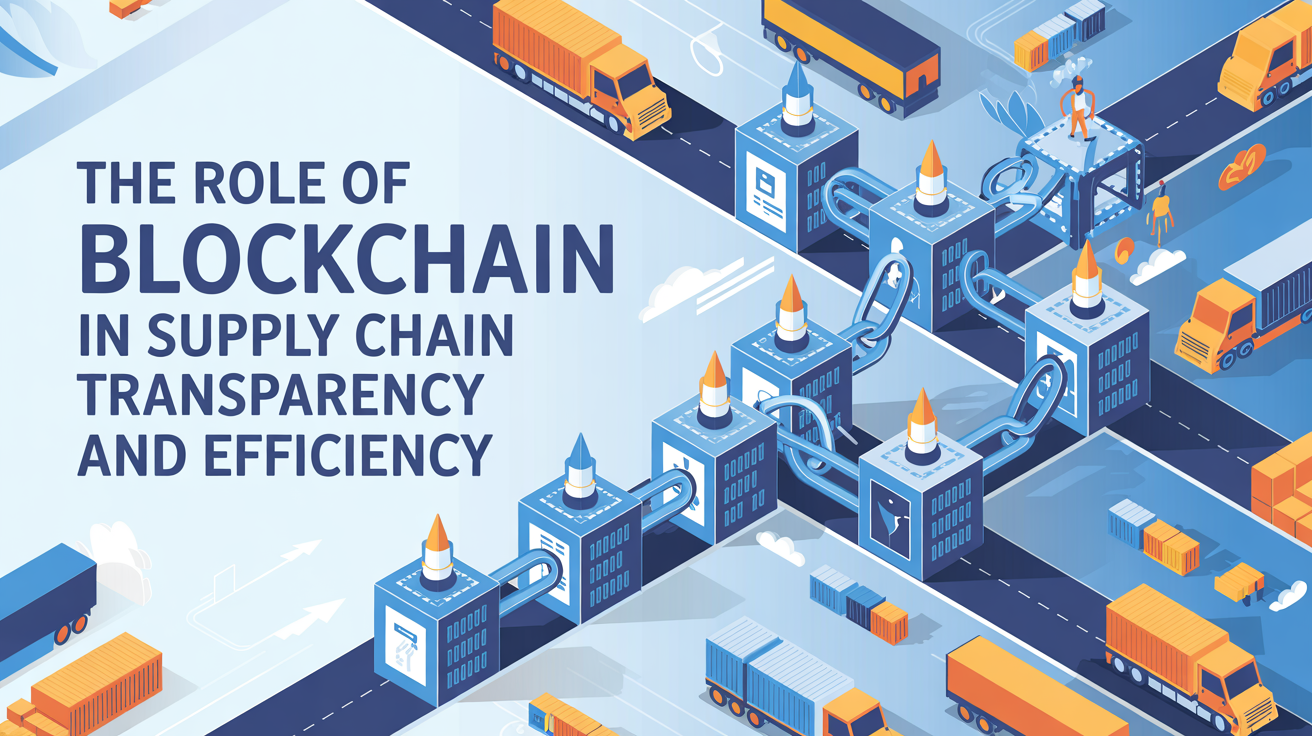






The blockchain technology promises the perfect remedy to all these by providing a secure, decentralized, and immutable ledger system. Thus, businesses must develop the transparency and efficiency of supply chain operations by adopting these strategies. Traditional supply chain management systems live with inefficiencies, fraud, and a lack of visibility. This technology promises the perfect remedy to all these by providing a secure, decentralized, and immutable ledger system. In this blog, we discuss and explore the role of blockchain technology in enhancing supply chain transparency and efficiency.
Understanding Blockchain Technology
Blockchain technology is a distributed ledger technology (DLT), where transactions are securely open and immutable across multiple systems. In essence, blockchain is a string of records, called blocks, with each block related to the previous one. As it traces a chain backward in time, alteration or deletion becomes practically impossible, which obviates the need to rely on any mediator and thus considerably reduces any attendant risks of fraud and error.
Blockchain And Supply Chain Transparency
1. Immutable Record Keeping
The most significant value of this technology is its establishment of an immutable trading history for any transaction. Thus, every movement of goods within a supply chain will be recorded for all time, making it easy to trace and ascertain the authenticity of the product.
2. End-to-End Visibility
Blockchain gives all stakeholders in its virtual channels (manufacturers, suppliers, distributors, and buyers) real-time information about the physical status of commodities in the supply chains. This may lessen instances of information asymmetries and allow discrepancies to be detected early.
3. Counterfeit Prevention
Counterfeiting is a challenge under the realms of the global supply chain system, with examples from industries such as pharmaceuticals, high-value goods, and electronics. By providing a digital record of the product from the manufacturer to the end user that is verifiable by all, blockchain technology can assist in the identification of counterfeit products.
4. Regulation Compliance
Most industries, except for a few, usually require documentation of the origin, safety practices, and ethical source of the products per the given regulatory framework. So it takes out really a great burden of complying with regulations since it can provide an open-track verifiable record about the product, thus satisfying the regulatory need without much manual intervention in the audit.
Improving Supply Chain Efficiency with Blockchain
1. Automated Smart Contracts
Smart contracts can be turned into terms of an agreement that would exist between a buyer and seller. These are usually embedded in lines of computer codes which would be executed automatically as soon as conditions of events programmed are satisfied in the blockchain networks. They can automate supply chain processes such as making payments, fulfilling orders, or clearing customs, thus minimizing time and administrative costs.
2. Prevention from Fraud and Errors in Blockchain
Traditional supply chains commonly bask in human error, fraud, and inconsistencies. However, with the application of a decentralized ledger such as that given by blockchain technology, these adverse conditions are remedied by ensuring no one can tamper with data and enforcing high integrity and legitimacy within any transaction.
3. Some More Inventory Management
Real-time tracking and data sharing will enhance inventory management in this technology. Stock levels may be monitored by companies, demand could be anticipated, waste could be reduced, and hence, operational efficiency might increase.
4. Fast-Track Transactions and Cost Savings
For invoices, payment through paper and intermediary-less blockchain transactions flies. It reduces the expenditure incurred from processing delays, third-party fees, and manual verifications.
Related Blogs: Petrochemical Value Chain: A Comprehensive Insight
Applications of Blockchain in Supply Chain Management
1. Safety and Traceability of Food
Blockchain is widely used in food safety tracking from farm to fork. Such states are Walmart and Nestlé famous ones which include the rapid tracing and diversion of the sources of foodborne diseases because of the containment of food safety risks through these solutions.
2. Pharmaceutical Supply Chain Systems
Pharmaceutical companies use this to eliminate counterfeit medicines and prove that their products are safe. It creates a secured trail to authenticate and communicate the real thing is delivered to the consumer.
3. Automotive Sector
Auto manufacturers use blockchain to track raw material sourcing, production processes, and distribution channels. This will help with quality control and ensure ethically sourced materials.
4. Fashion and Luxury Goods
On the other hand, luxury brands use the blockchain to provide consumers with an open record of the journey of a product and its true source therefore preventing fraudulent goods from entering the market.
Relationship of limitations and challenges of Blockchain in Supply Chain
1. Set-up costs—high
Extremely high for both implementation and development of infrastructure, software, and training. Often, implementation of blockchain proves difficult even for many SMEs because of the financial constraints attached to it.
2. Scalability Concerns
The increasing volume of transactions may lead the blockchain networks to have scalability crises and thus may yield a flow of slow processing time and an increase in energy consumption.
Integration with Existing Systems
This means that most supply chain networks are dependent on legacy systems, which may or may not coexist with blockchain technology. It takes a long time to integrate blockchain with these pre-existing ones.
Regulatory and Legal Issues
The legal framework within which supply chains adopt blockchain is still under development. Enterprises will have to encounter an environment characterized by many ambiguities regarding regulation, as well as compliance with data protection laws and industry regulations.
For more information: Business Ideas and Investment Opportunities
Promising Future for Blockchain in Supply Chain Management
All those hybrid blockchain models, advanced consensus mechanisms, and AI integrated with IoT will bring many changes, but for future supply chain management, the adoption of blockchain will remain an important milestone. Besides, governments and industry leaders are heavily investing in R&D into blockchain to overcome existing roadblocks and standardize the application of blockchain across global supply chains. Soon, with the advancement of technology, blockchain will become more scalable, cost-friendly, and universally adopted across industries.
Closing Thoughts
The transparency, fraud reduction, and efficiency that this technology offers could drastically change supply chain management itself. From safety in the food eaten to authenticity in pharmaceuticals and optimization of inventory, the ways businesses track their supply chains and manage them change dramatically. Although there are challenges, the continuous advancement and wider adoption of blockchain as an infrastructure will go a long way towards creating a more transparent and efficient global ecosystem for supply chains. Companies adopting blockchain technology early would have a competitive advantage in building trust with customers, reducing costs of operation, and optimizing supply chain processes.