





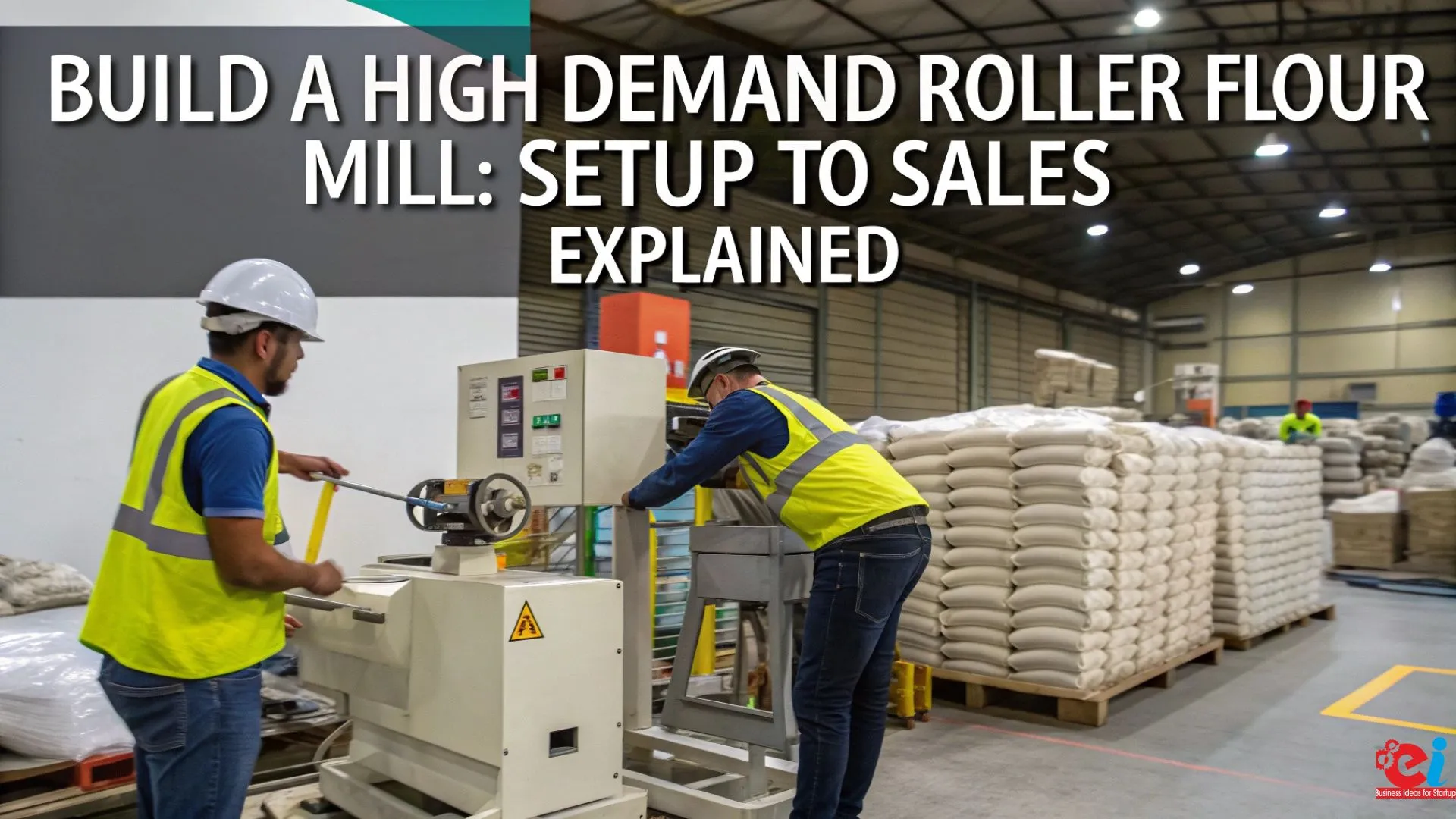
In India’s agro economy, wheat flour is a household essential and a commercially important item as it sustains bakeries, food processing units, and FMCG companies. The supply of clean and hygienically milled flour has led to the rise of sophisticated processing units called roller flour mills. Unlike traditional chakkis, a stone grinding method, a roller flour mill uses modern milling technology with steel rollers and pneumatic systems which ensure high output, a refined product, and consistent flour quality.
There is a significant gap in the market for entrepreneurs wishing to venture into this space, especially given the continuously sustained and expanding demand for flour products like atta and maida, semolina, and wheat bran. From modern urban households to sprawling bakeries, consumers are increasingly broadening. When properly planned and managed, this business not only guarantees high return but also strategically situates itself as a vital part of a robust supply chain of food processing industry.
Establishing a roller flour mill entails raw material procurement, distribution management, workforce organization, technology selection, and legal compliance. Let’s refine this understanding so that one can successfully set up a roller flour mill plant.
Every Step in the Roller Flour Milling Process
Roller flour milling is an automatic, remarkably sophisticated procedure that splits the wheat into three parts: bran, germ, and endosperm. It also refines the endosperm into various grades of flour. The first step in this process includes cleaning the raw wheat grains and conditioning them before they go through the series of steel roller mills. Each set of rollers is designed to perform a specific action from breaking the wheat kernels to smashing the wheat into fine flour.
Steam or hot water is applied to the cleaned wheat to add moisture and soften the endosperm while toughening the bran. This helps improve separation in the milling process. The wheat is then sent to break rolls that crack the grain open. In the next stage, the endosperm is refined into flour using reduction rolls. Bran and germ are uprooted from the wheat while Plansifters, purifiers, and sifters, along with the roller system, segregate the remaining particles by size.
Each type of flour produced, maida, atta, sooji, and bran, is stored until dispatch in bags or silos. Uniform flour texture, extended shelf life, and compliance with food safety standards are made possible through controlled processes. Additionally, the flour is segregated without compromising accuracy.
Related: Wheat Processing and Value-Added Opportunities
Deciding on the Right Machinery for Your Flour Mill
Selecting efficient machinery is one of the most crucial investments made for a roller flour mill. As opposed to older setups, modern flour mills operate on an automated layout consisting of multiple systems that work in alignment. This includes pre-cleaning equipment like vibratory screens, destoners, and magnetic separators to remove impurities from wheat. After cleaning, the wheat is conditioned through tanks and screw conveyors which add moisture.
The roller milling section remains central to the operations. The industrial break and reduction rollers are arranged in steps to carry out different levels of wheat processing. Each pair of rollers is served by gates, metering devices, and exhaustion devices that guarantee operational continuity, as well as thermal control. Adding to this section are plansifters for flour classification and purifiers for the refinement of semolina using air currents and sieves.
In addition to post-milling operations where different streams of flour are blended to specification, flour is weighed and branded in automated units replaced in advanced plants which incorporate SCADA control panels, automated batching software, and other sophisticated tools, marking a new level of productivity.
However, sustained productivity relies on the proper configuration, maintenance, and skilled personnel, and reputable global suppliers for long-term support deliver enduring returns.
Wheat Procurement and Storage Strategy
Establishing a roller flour mill requires a continuous and reliable supply of quality wheat. The major wheat producing states of India are Punjab, Haryana, Uttar Pradesh, Madhya Pradesh, Rajasthan and Maharashtra. As a seller, one can buy wheat directly from the mandis during the harvest season, contract with the aggregators, or procure it from FCI (Food Corporation of India) through tenders.
The type of wheat is critical as it affects the color and texture of flour and its yield. For example, hard wheat varieties yield more maida and semolina while soft wheat varieties are used for whole wheat atta. Depending on the production plan and demand in the market, different strategies for sourcing wheat different associated with protein content, moisture level and type of wheat need to be considered.
Wheat storage also needs strong and climate controlled infrastructure. Silos or scientifically constructed godowns with vent, fumigation, and humidity control features should be used to store wheat and prevent rot and pest infestation. To maintain year round operations, bulk purchase and proper inventory rotation is crucial.
Investment and Infrastructure Financing
The establishment of roller flour mills involves a large expenditure of capital, however, when strategically managed, the investment can be highly profitable. The amount of investment depends on the achievable capacity (in TPD—tonnes per day), the degree of automation, as well as the location’s real estate values. A plant with 50 TPD capacity typically incurs an investment of ₹2-5 crore, which encompasses the cost for machinery, civil construction, electrical components, labor quarters, and working capital.
The land area needed depends on the scale, but for medium to small units it is in the range of 1 – 2 acres. The site should have direct links to transport facilities (rail/bus), markets for raw materials, power conduits, and trained personnel. Access to urban population centers or food processing industry serves as an added advantage as it reduces logistics costs and improves supply timelines.
Consider the infrastructure integration while layout designing in order to enable the seamless flow of operational processes, from raw wheat intake and cleaning all the way through milling, bagging, and dispatching. The incorporation of Water, Power Backup Infrastructure, and Effluent Treatment facilities (if there is a requirement) must also be in place since the inception phase.
Related: The Flourishing Market of Buckwheat in India
Compliance and Permits Quality Control and Regulatory
Roller flour mills must comply with business, food safety and environmental safety norms. The first step involves getting Udyam registration to avail MSME benefits and later registering business under Goods and Services Tax. In addition, an FSSAI authorization is a prerequisite without which one cannot legally manufacture or sell any kind of food products in India.
Approval for controlling waste and dust management requires a license to operate a factory issued by the Local Government and a Pollution Control Board clearance. If selling products under a self-owned brand, trust and credibility are bolstered with BIS certification. Barcodes, trademarks, and labeling as mandated under the Legal Metrology Act must also be followed.
To foster trust at an institutional and export level, regular laboratory checks of flour batch hygiene controls, third-party certifications, HACCP compliance, and ISO 22000 certified food safety undergo maintenance.
Market Potential and Profitability
Because of rising demand for easy-to-cook and packaged food, the Indian market for flour is booming, even though it remains fragmented. Consumption of flour is not only increasing in households, but also all across the hospitality, education, medical, and industrial sectors.
Process efficiency, raw materials cost, and scale affect profit margins across roller flour mills which typically sit at 10%-18%. Revenue is increased by the sale of wheat bran, a waste product, to cattle feed and edible oil goliath manufacturers. Enhanced wastage and better utilization of raw wheat is enjoyed by multi-product mills (atta, bran, suji, maida).
Value addition opportunities can include fortified or organic flour variants, multi-grain blends, and even institutional packs. Your market reach can be broadened with branding, innovations in packaging, and strategic logistics relations such as with e-commerce and food delivery services.
If aligned with B2B clients via contracts, most new mills attain operational break-even within 3–4 years, especially if situated in high-demand areas.
Conclusion: Flourishing in the Grain Economy
The roller flour mill industry is the unseen backbone of every loaf of bread, every batch of biscuits, and every chapati that finds its way to Indian tables. As dietary habits modernize and food safety awareness increases, consumers are seeking clean, branded, and fortified flour over unbranded or stone-ground variants.
Starting a roller flour mill is a serious entrepreneurial endeavor, but one that offers strong growth potential, brand scalability, and a role in strengthening the national food supply chain. It is a business that feeds the nation—literally and economically.
With the right guidance, machinery, raw material procurement strategy, and marketing plan, your flour mill can become a key supplier not just to homes and bakers, but also to the larger processed food and FMCG ecosystem.Niir Project Consultancy Services (NPCS) specializes in end-to-end solutions for roller flour mill businesses, including project reports, layout planning, machinery selection, compliance support, and profitability consulting.


