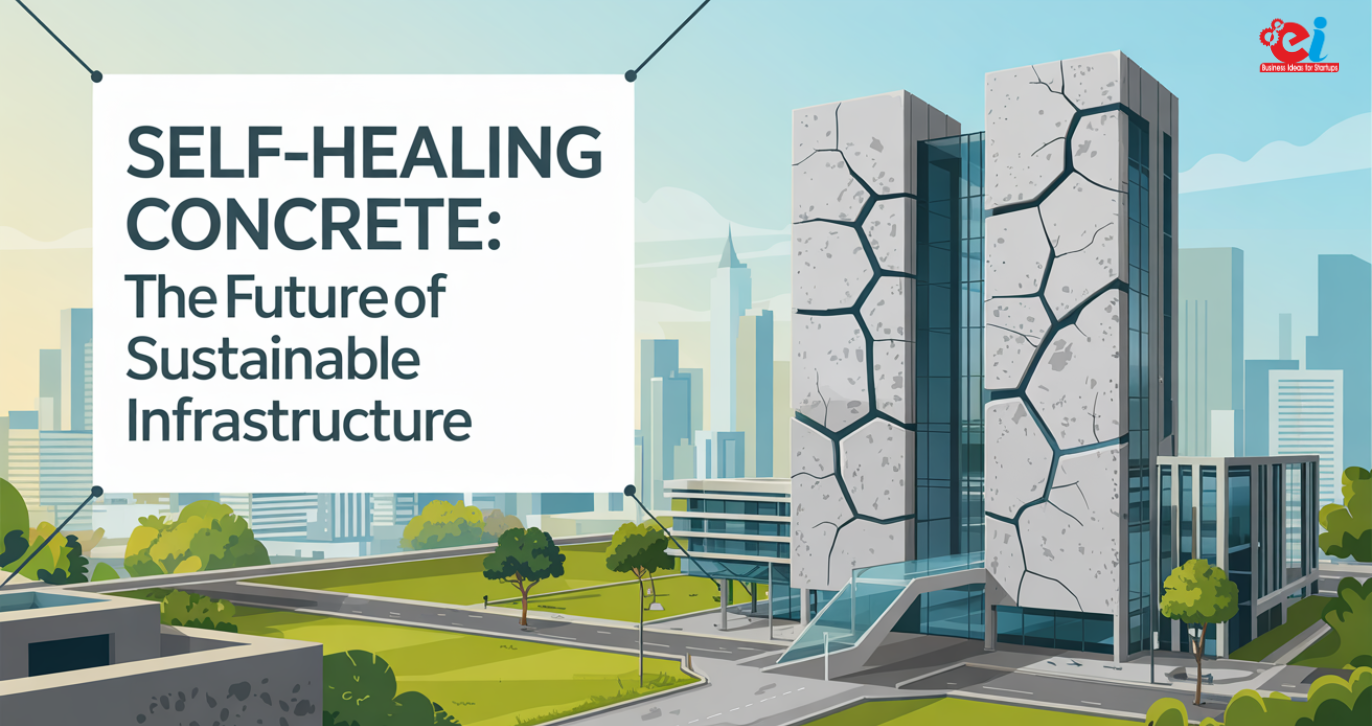






The self-healing concrete is one of the many wonderful inventions in civil engineering. This material possesses a unique self-healing property, meaning it heals itself. The future of sustainable infrastructure is therefore set for a change by the integration of bioengineering, nanotechnology, and chemistry into healing concrete.
Need for Self-Healing Concrete
Concrete is the most well-known construction material, as it is strong, durable, and cheap but an easily crackable structure. Major cracking is caused because temperature changes, water penetration, and other forces apply to the structural surface. The common result is the entry of water and corrosive chemicals into the structure, which leads to steel inside and, ultimately, of the whole structure.
Normal repair methods are costly, time-consuming, and sometimes very disruptive and environmentally damaging. Together, they eliminate these expensive, tedious repairs and guarantee infrastructure long life.
How Does self-healing concrete Work?
The concrete utilizes various mechanisms for repair from cracks, but always ensures durability and rigidity of the structure. These include several primary self-healing methods:
- 1. Biological Self-Healing Concrete
This involves the use of bacteria in self-repair, one of the more promising ways. It uses certain spores of bacteria, like Bacillus species, that have already been used at different concentrations and included in the concrete mix. The spores remain dormant till the water infiltrates somewhere through cracks and activates the microbes. Once turned on, they feed on calcium lactate or other nutrients and excrete calcium carbonate. That fills the cracks.
2. Capsule-Based Self-Healing
This method embeds tiny capsules in the concrete matrix that contain healing agents such as epoxy resin, polyurethane, or calcium-based compounds. Such capsules break open when a fissure forms and provide healing agents, which then react with moisture or air to fill and seal the fissures.
3. Vascular Self-Healing Systems
Like biological circulatory systems, hollow tubes or channels are embedded in the concrete. Healing agents contained in the channels are released whenever cracks are formed, and as soon as these agents are exposed, they react with surrounding materials to close the gap and restore strength.
4. Autonomous Mineral Precipitation
Some of the mineral compounds include magnesium-based agents or agents with crystalline growth. These compounds are incorporated into the concrete mix in case cracks occur with the action of air and water; these agents precipitate minerals that seal the cracks in a natural manner.
Also Read: Glass Fiber Reinforced Concrete (GFRC) Plant
Advantages
The benefits are plenty for the construction industry and other sectors:
1. Prolonged Life of Infrastructure
It enhances the life span of buildings and structures since it will stop cracks from propagating further down and weakening the structure. This complementary additional lifespan means services and repairs will not have to be frequent.
2. Lower Repair and Maintenance Costs
Normal concrete structures are required to be inspected frequently and are subject to costly repairs. Self-healing mechanisms drastically reduce maintenance costs as well as the need for labor-intensive intervention.
3. Eco-Friendly
Manufacturing concrete generates a substantial amount of carbon into the atmosphere. From longevity and fewer repairs, this healing concrete reduces the amount of cement that is consumed, which in turn reduces the carbon footprint.
4. Improved Structural Safety
Cracks compromise the safety of structures, especially in vulnerable settings such as earthquake zones and coastal regions. The healing concrete will improve resilience, offering fewer arguments toward structural failure risk.
5. Less Resource Consumption
Fewer repairs save direct raw materials, water, and energy, furthering the resource efficiency of a construction project.
Applications of Self-Healing Concrete
Self-healing concrete can be used in different classes of infrastructure:
1. Bridges and Highways
The constant stresses placed on roads and bridges by heavy traffic, resorting weather conditions, and mechanical stresses mean that self-healing concrete would mitigate cracking and potholes, promoting durability in the long run.
2. Buildings and Skyscrapers
Cities gain with respect to maintenance costs and structural integrity provided by self-healing concrete for urban structures, especially in high-rise buildings.
3. Tunnels and Underground Structures
Water ingress can be detrimental for subway systems, tunnels, and underground parking. In this case, self-healing concrete comes to prevent leakage and guarantee long-term stability.
4. Dams and Water Retaining Structures
Water pressure is ever pertinent for water overage, dams, and waterways. It increases efficiency and sustainability by reducing leakages due to cracks.
5. Military and Defense Infrastructure
Military bunkers, airstrips, and defense structures need to be very durable. The concrete would provide further resistance to mechanical and environmental stress.
Challenges and Limitations
Nonetheless, with all its advantages, self-healing concrete has its own set of limitations:
1. High Initial Cost
The integration of special healing agents, such as bacteria or microcapsules, increases production costs, making self-healing concrete more expensive than conventional concrete.
2. Healing-Time Constraints
Although self-healing mechanisms work, healing may sometimes take days or weeks, depending on environmental factors and the intensity of the cracks.
3. Scalability and Implementation
A large-scale adoption will demand alterations to existing construction practices and quality control measures to validate consistency.
4. Durability of Healing Agents
Some healing agents under consideration may have a long life, whereas some might slowly degrade, and this is a subject of further research.
Read our Blogs: Key Infrastructure Projects That Are Transforming India’s Economy
Future Directions
Research and development for self-healing concrete continue to progress, resulting in even better efficacy and economic benefits. Among some of the emerging trends are:
1. AI and Smart Concrete
Concrete enabled with Artificial Intelligence (AI) and sensors may serve to complement self-healing by autonomously detecting cracks and starting repair mechanisms.
2. 3D Printed Self-Healing Concrete
3D printing combined with self-healing materials allows customized construction and better application of the healing agents.
3. Eco-Friendly Healing Agents
Another area of research is to develop healing materials that are biodegradable and plant-based. This would decrease dependency on synthetic chemicals.
4. Improvement of Commercial Viability
As production technologies improve and the demand for this product continues to rise, the prices will inevitably drop, rendering mainstream for construction applications.
Closing Thoughts
So, self-healing concrete will prove to be a boon for sustainable infrastructure and will eventually provide an all-in-one solution to one of the most prominent challenges prevailing in the construction industry-degradation and cracking damages. By adopting mechanical, chemical, and biological self-healing approaches, self-healing concrete complements longevity with cost-effective repair options and eco-friendliness.