

NPCS has been helping entrepreneurs, startups, MSMEs, and industrial investors since 1992 with detailed project reports, feasibility studies, market research, and business consulting services across 50+ industries.
South Africa is quietly rewarding entrepreneurs who back manufacturing business ideas with real numbers instead of guesswork. The country remains the continent's most industrialised economy, and its factories still generate roughly an eighth of national output even after a difficult few years. For anyone weighing new business ideas, this sector offers something rare in the region: established infrastructure, deep-water ports, and a policy machine actively pushing local production.
This guide breaks down what a manufacturing business in South Africa actually looks like today. It draws on current government and industry data rather than recycled estimates, and it points new entrants toward the incentives, regions, and sub-sectors most likely to pay off. Whether the goal is a small workshop or a plant inside a special economic zone, the figures below set realistic expectations.
Timing matters more than enthusiasm when choosing a sector. South Africa's manufacturing output grew just 0.3% in the third quarter of 2025, a soft number taken alone. Economists still expect the picture to improve as energy supply stabilises and interest rates ease, which changes the calculus for anyone planning a multi-year plant investment rather than a quick flip.
|
Real GDP grew 1.1% in 2025, up from 0.5% in 2024, while the country logged ten consecutive quarters of trade surplus — a rare stretch of stability for an emerging manufacturing base (national statistics office; trade research data). |
Three forces support the case for starting a manufacturing business idea now. First, an expected 14.4 gigawatts of new wind capacity by 2030 is easing the power shortages that once shut down production lines without warning. Second, major retailers and export buyers increasingly demand greener supply chains, rewarding manufacturers who modernise early. Third, government incentive budgets keep expanding even as broader public spending tightens, which lowers the effective cost of entry.
None of this guarantees quick profit. A founder entering an undercapitalised sub-sector today, backed by grant support, often faces less competition than one entering a saturated market once recovery becomes obvious to everyone else.
Demand for locally made goods in South Africa comes from three main buyers: the domestic retail and construction market, regional SADC neighbours, and export-driven industries such as automotive and agro-processing. Household spending rose 3.6% in 2025, the strongest single driver of overall growth, and this fed directly into demand for packaged food, building materials, and household goods.
Automotive component manufacturing, food and beverage processing, and metals and chemicals remain the largest end-user categories buying from local factories. Meanwhile, e-commerce fulfilment growth, with the online grocery segment alone projected near R80 billion by 2026, is quietly lifting demand for packaging, logistics equipment, and light industrial goods (industry estimate).
Imports still dominate machinery, electronics, and refined petroleum, which signals unmet local demand in these categories. A new entrant targeting import substitution, producing locally what currently arrives by container ship, tends to find both government support and a ready customer base already waiting.
South Africa runs one of Africa's more developed industrial investment incentive systems, administered mainly through the Department of Trade, Industry and Competition (the dtic). New manufacturers should understand the following programmes before drafting a business plan.
The Manufacturing Support Programme (MSP) offers a reimbursable grant of up to 20% (or 30% for qualifying transformation-owned businesses) of capital expenditure and raw material costs, capped at R10 million over two years (national incentive guide). The Black Industrialists Scheme (BIS) provides cost-sharing grants of 30% to 50% of qualifying project costs, up to R50 million, for majority black-owned, black-managed manufacturers, and moved onto a new online application platform in mid-2026.
The Industrial Development Corporation (IDC) complements these grants with concessionary loans, including a Working Capital Facility and a Plant and Equipment Facility priced at a fixed 2.5% rate. Export-focused founders can also apply for market-entry support that helps cover the cost of exhibitions and trade missions abroad.
At regional level, the Special Economic Zone (SEZ) Programme is the strongest state-backed facility for new entrants. Zones such as Coega in the Eastern Cape, Richards Bay in KwaZulu-Natal, and Dube TradePort near Durban offer reduced corporate tax rates, streamlined customs procedures, and employment tax incentives to tenants that set up manufacturing operations inside their boundaries — a practical route into this manufacturing business in South Africa for founders without an existing factory site.
South Africa's manufacturing value added stood at 12.8% of GDP in 2024, and while parts of the sector posted negative growth through 2025, the wider economy looks set to firm up. Bank economists project GDP growth climbing to 1.4% in 2026, with seven of the country's ten major industries expanding through 2025.
Growth drivers going forward include renewable energy stability removing the load-shedding constraint that hurt output for years, roughly R1.07 trillion in planned public infrastructure spending over the current three-year budget cycle, and a competitive rand that keeps South African exports attractively priced against European and Asian rivals. Structural constraints remain, particularly freight and logistics bottlenecks, so founders should weigh transport reliability into any location decision.
The table below tracks the value of South Africa's manufacturing output and projects it forward to 2035, applying a conservative CAGR assumption in line with current bank forecasts. Historical figures come from the national statistics office; years beyond 2026 are industry estimates.
|
Year |
Manufacturing GDP (R billion, approx.) |
Note |
|
2021 |
1,890 |
Historical (national data) |
|
2022 |
1,970 |
Historical (national data) |
|
2023 |
2,020 |
Historical (national data) |
|
2024 |
2,050 |
Historical (national data) |
|
2025 |
2,066 |
Historical (national data, Q4 annualised) |
|
2026 |
2,110 |
Forecast, assumed ~2.1% CAGR |
|
2030 |
2,330 |
Forecast, assumed ~2.1% CAGR |
|
2035 |
2,590 |
Forecast, assumed ~2.1% CAGR |
Assuming the sector holds a modest compound annual growth rate near 2.1%, roughly in line with the current government growth trajectory, South Africa's manufacturing output could approach R2.59 trillion by 2035, up from about R2.07 trillion in 2025 (industry estimate based on stated CAGR assumption). This is a conservative path rather than a boom scenario; it assumes energy reliability holds and freight bottlenecks ease only gradually.
A faster recovery scenario is plausible if planned renewable capacity comes online on schedule and infrastructure spending is executed as budgeted. Under that path, some economists see manufacturing's GDP share climbing back above 13% before 2035, reversing several years of relative decline.
South Africa has held a positive trade balance for ten consecutive quarters, with exports of R541 billion against imports of R468 billion in the fourth quarter of 2025 (trade policy research data). That surplus, however, is driven mainly by mineral exports; the manufacturing trade balance itself still runs in deficit because of heavy imports of machinery, vehicles, and processed goods.
This gap is the opportunity. Imports remain dominated by refined petroleum, vehicles, machinery, and electronics, which means any founder who can manufacture credible substitutes for these categories locally is chasing genuine, provable demand rather than a hopeful guess. Asia has overtaken Europe as South Africa's largest trading partner, while intra-African trade, boosted by the African Continental Free Trade Area, is growing and offers South African-made goods a natural regional market beyond the domestic base.
New entrants rarely compete head-on with these companies; instead they typically feed into their supply chains as component or raw-material suppliers, or serve niches these larger players do not prioritise.
|
Company |
Focus / Note |
|
Stellantis (Coega SEZ, Eastern Cape) |
Vehicle assembly for Jeep, Fiat, Citroën, Opel and Peugeot brands |
|
ACTOM |
Pretoria West electrical equipment and battery assembly hub |
|
Tiger Brands |
Large-scale food and grain processing group |
|
Premier FMCG |
Bakery, milling and branded consumer food products |
|
Cerebos (Coega SEZ) |
Food ingredient and salt processing |
|
Sasol |
Chemicals and synthetic fuels manufacturing |
|
ArcelorMittal South Africa |
Steel production and metals beneficiation |
|
Dynamic Commodities (Coega SEZ) |
Agro-processing and frozen food exports |
Several sub-sectors look particularly promising for new founders weighing business ideas in this space. Agro-processing benefits from South Africa's strong raw agricultural base and rising demand for value-added exports. Renewable energy component manufacturing, from solar mounting hardware to battery assembly, rides a genuine domestic infrastructure wave rather than a speculative trend. Automotive component supply remains attractive given Coega's established assembly lines and the Automotive Production and Development Programme's ongoing incentive support.
Packaging and light industrial goods tied to e-commerce fulfilment also show durable demand growth, since online retail keeps expanding regardless of broader GDP swings. Any of these paths benefits from combining a manufacturing business with export ambitions, since AfCFTA-linked regional demand adds a second market beyond the domestic one.
Setup costs vary sharply by sub-sector, plant scale, and whether the site sits inside a special economic zone with its associated tax relief. The table below offers indicative ranges in South African rand for common entry points; actual figures depend on machinery choice, capacity, and location.
|
Business Type |
Approx. Capital Investment (ZAR) |
Notes |
|
Small food/agro-processing unit |
R500,000 – R2.5 million |
Basic processing line, shared or leased premises |
|
Packaging or plastics conversion plant |
R2 million – R8 million |
Depends on extrusion/moulding machinery scale |
|
Metal fabrication or components workshop |
R1.5 million – R6 million |
CNC and welding equipment dependent |
|
Automotive component supply unit |
R5 million – R25 million |
Higher for SEZ-based Tier 1/2 supplier operations |
|
Renewable energy component assembly |
R3 million – R15 million |
Solar/battery assembly line, industry estimate |
Is South Africa a good country to start a manufacturing business?
Yes. It has the continent's most developed industrial base, deep-water ports, and an active dtic incentive system, though founders should budget for freight and energy planning.
How much money do I need to start a manufacturing business in South Africa?
Small units start around R500,000, while automotive or chemical plants can require R5 million or more (industry estimate; varies widely by sub-sector).
What government grants are available for manufacturers in South Africa?
Key options include the Manufacturing Support Programme, the Black Industrialists Scheme, and IDC concessionary loan facilities.
Which industries are growing fastest in South African manufacturing?
Agro-processing, renewable energy components, automotive parts, and packaging tied to e-commerce fulfilment show the strongest current demand.
Are Special Economic Zones worth it for a new manufacturer?
Often yes, since SEZs like Coega and Richards Bay offer reduced corporate tax, faster customs clearance, and ready industrial infrastructure.
What are the biggest import categories South Africa could replace with local manufacturing?
Machinery, electronics, refined petroleum products, and certain vehicle components remain heavily import-dependent.
How do I register a manufacturing company in South Africa?
Founders obtain a provisional registration certificate, register for a tax number with SARS, then register the business name with the CIPC.
Does South Africa have a positive or negative manufacturing trade balance?
Overall merchandise trade runs a surplus driven by minerals, but the manufacturing trade balance specifically still runs in deficit.
What is the Black Industrialists Scheme and who qualifies?
It is a dtic grant of up to R50 million, cost-shared at 30–50%, for majority black-owned and black-managed manufacturing enterprises.
Which South African regions are best for setting up a factory?
Gauteng for market access, KwaZulu-Natal and the Eastern Cape for port-linked export manufacturing, and the Western Cape for oil, gas and marine-related industry.
Is manufacturing machinery available locally or does it need to be imported?
Basic equipment is often available locally or regionally, but specialised machinery for automotive, chemicals, and electronics is frequently imported.
South Africa's manufacturing sector is not booming, but it is stabilising, and stabilising markets are frequently where patient entrepreneurs get the best terms on grants, land, and supplier partnerships. The mix of a large, still-underused industrial base, a positive trade balance, and an incentive system that keeps expanding funding even during tight budget years gives new entrants real, checkable reasons to move now rather than wait for a cycle that is already turning.
|
We generally advise clients to pair any manufacturing plan here with an SEZ feasibility check early, since the tax and customs benefits can materially change a project's break-even timeline — it is worth the extra week of research before committing capital. |
- Statistics South Africa (Stats SA) — national GDP, manufacturing value-added and quarterly growth data
- the dtic (Department of Trade, Industry and Competition) — incentive scheme guides, Manufacturing Support Programme and Black Industrialists Scheme details
- Trade & Industrial Policy Strategies (TIPS) — quarterly export and import tracker data
- Industrial Development Corporation (IDC) — manufacturing finance facilities and loan terms
- World Bank Development Indicators — manufacturing value added as percentage of GDP
- Coega Development Corporation / InvestSA — Special Economic Zone investment and sector data
Please choose a project below related to this category.

Every furnace, kiln, and industrial oven in the country loses money through its walls. That single fact explains why micro porous insulation boards &m...
|
Capacity : Microporous Insulation Boards: 168 Kgs Per Day Fine Dust: 5.2 Kgs Per Day |
Plant and Machinery cost: 73 |
|
Working Capital : N/A |
Rate of Return (ROR): 27 |
|
Break Even Point (BEP): 67 |
TCI :
|
|
Cost of Project : 186 |
Due to the rapid evolution of the industry based on the diversity of products that customers can utilize, the production of Viscose Filament Yarn (VFY...
|
Capacity : Viscose Filament Yarn - 30D: 2 MT Per Day Viscose Filament Yarn - 40D: 2 MT Per Day Viscose Filament Yarn - 50D: 11 MT Per Day Viscose Filament Yarn - 60D: 28 MT Per Day Viscose Filament Yarn - 75D: 6 MT Per Day Viscose Filament Yarn - 100D: 2 MT Per Day Viscose Filament Yarn - D120: 20 MT Per Day |
Plant and Machinery cost: 27900 |
|
Working Capital : N/A |
Rate of Return (ROR): 30 |
|
Break Even Point (BEP): 39 |
TCI :
|
|
Cost of Project : 46500 |
The versatility of epoxy resins and their popularity in many fields like construction, automotive, and electronics, have made them a valuable product....
|
Capacity : Epoxy Resin (Liquid): 4 MT Per Day |
Plant and Machinery cost: 181 |
|
Working Capital : N/A |
Rate of Return (ROR): 29 |
|
Break Even Point (BEP): 49 |
TCI :
|
|
Cost of Project : 550 |
The rapid changes in the renewable energy sector present many opportunities for starting new businesses in the manufacturing of Monocrystalline Solar...
|
Capacity : 4 Mw Per Day |
Plant and Machinery cost: 13570 |
|
Working Capital : N/A |
Rate of Return (ROR): 28 |
|
Break Even Point (BEP): 47 |
TCI :
|
|
Cost of Project : 20737 |
The rise in demand for lithium-ion batteries has created a new set of challenges in battery recycling for electric vehicles, smartphones, and solar en...
|
Capacity : Black Mass: 4,200 MT Per Annum Lithium: 3 MT Per Annum Cobalt: 9 MT Per Annum Nickel: 12 MT Per Annum |
Plant and Machinery cost: 434 |
|
Working Capital : N/A |
Rate of Return (ROR): 31 |
|
Break Even Point (BEP): 55 |
TCI :
|
|
Cost of Project : 1150 |
In the ever-evolving landscape of the electrical and power generation sector, power transformers remain a critical component for effective energy tran...
|
Capacity : Power Transformers (132/33KV, 10000KVA Core Type Oil Cooled): 120 Nos Per Annum |
Plant and Machinery cost: 111 |
|
Working Capital : N/A |
Rate of Return (ROR): 33 |
|
Break Even Point (BEP): 73 |
TCI :
|
|
Cost of Project : 289 |
In the race for advanced materials that are lightweight, ultra-strong, and performance-driven, carbon fibre stands out as a clear winner. Once used on...
|
Capacity : Project Capacity:10,00,000 Kg Per Annum |
Plant and Machinery cost: 6500 |
|
Working Capital : N/A |
Rate of Return (ROR): 30 |
|
Break Even Point (BEP): 54 |
TCI :
|
|
Cost of Project : 1700 |
Aluminium billets, when produced from recycled scrap, balance the increasing demand for downstream infrastructures like extrusion for EVs, building, s...
|
Capacity : Aluminium Billets:1,200 MTPA, Aluminium Dross by Product:54 MTPA |
Plant and Machinery cost: 274 |
|
Working Capital : N/A |
Rate of Return (ROR): 31 |
|
Break Even Point (BEP): 61 |
TCI :
|
|
Cost of Project : 730 |
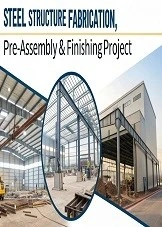
The industrial steel structure fabrication industry is direct at the intersection of building our cities and fuelling our industrialization. It is a h...
|
Capacity : PEB Components, Crash Barriers, Transmission Towers, Steel Gates, Grills & Railings: All 500 MTPD. |
Plant and Machinery cost: 1500 |
|
Working Capital : N/A |
Rate of Return (ROR): 35 |
|
Break Even Point (BEP): 39 |
TCI :
|
|
Cost of Project : 18700 |
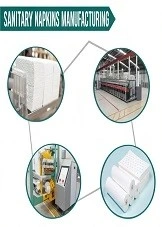
The field of feminine hygiene is a very vibrant space where new ventures and start-ups have a wide scope of making a real difference in society, besid...
|
Capacity : 30,000 Pkts. Per Day |
Plant and Machinery cost: 371 |
|
Working Capital : N/A |
Rate of Return (ROR): 29 |
|
Break Even Point (BEP): 51 |
TCI :
|
|
Cost of Project : 607 |
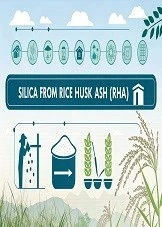
The manufacturing sector is transforming as many industry players are beginning to tap into the potential of agro waste. Among the many possible oppor...
|
Capacity : Silica: 3,000 MTPA, Activated Carbon (by product): 330 MTPA, Sodium Carbonate (by product): 495 MTPA |
Plant and Machinery cost: 1300 |
|
Working Capital : N/A |
Rate of Return (ROR): 29 |
|
Break Even Point (BEP): 46 |
TCI :
|
|
Cost of Project : 2000 |
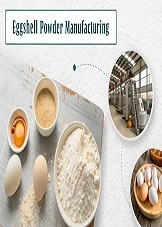
Currently, in the context of green entrepreneurship and the circular economy, the processing of eggshells into a powder represents a promising idea fo...
|
Capacity : 5 MT Per Day |
Plant and Machinery cost: 16 |
|
Working Capital : N/A |
Rate of Return (ROR): 29 |
|
Break Even Point (BEP): 52 |
TCI :
|
|
Cost of Project : 226 |

Entrepreneur India, an Industrial monthly magazine on industrial development, technologies & project opportunities aims at simplifying the process of choosing the suitable project for investment.

Entrepreneur India - Copyright 2017-. All rights reserved.



