

NPCS has been helping entrepreneurs, startups, MSMEs, and industrial investors since 1992 with detailed project reports, feasibility studies, market research, and business consulting services across 50+ industries.
Entrepreneurs with ₹3-3.5 crore to invest sit in a sweet spot of Indian manufacturing. This ticket size is large enough to run a proper factory with modern machinery, yet small enough to stay out of heavy corporate territory. It is a genuine range for business ideas that combine scale with manageable risk.
This bracket opens the door to real manufacturing opportunities, not just trading or assembly work. Cement, chemicals, packaging, food processing, and renewable energy all have viable entry points here. A reader browsing this page will find a working shortlist of business ideas rather than a single product pitch.
Many first-time promoters worry that ₹3-3.5 crore is too small for serious manufacturing. In practice, this range covers everything from a mini cement unit to a solar panel assembly line. The right choice depends on local demand, raw material access, and the promoter's own comfort with the process involved.
MSME registrations in this investment band have stayed steady over the past few years, according to industry association estimates, as more first-generation entrepreneurs move from trading into actual production. That shift matters, since manufacturing tends to build longer-term asset value than a pure trading setup.
Banks and NBFCs treat this bracket as a standard project finance case, not an exotic one. Because the ticket size is well documented, project appraisal moves faster than for very large plants. That speed matters when machinery prices or site leases are time-bound.
Credit guarantee cover has widened recently. CGTMSE guarantee coverage for standard micro and small enterprises now extends up to ₹10 crore, with DPIIT-recognised startups eligible for cover up to ₹20 crore under a related scheme (CGTMSE circular, 2025-26 update). A ₹3-3.5 crore project therefore sits comfortably within collateral-free lending limits, which lowers the barrier for a first-time promoter.
|
MSME credit guarantee coverage under CGTMSE has been raised to ₹10 crore for standard units as of the 2025-26 revision, up from the earlier ₹2-5 crore ceiling many lenders still quote — a meaningful jump for entrepreneurs financing plant and machinery in the ₹3-3.5 crore range (CGTMSE circular data). |
This bracket also spans an unusually wide set of sectors. A promoter can pick construction materials, chemicals, food processing, or renewable energy equipment, all within the same rough budget. That breadth is exactly what makes this range useful for someone still comparing business ideas rather than committed to one product.
The table below lists manufacturing business ideas that realistically fit a ₹3-3.5 crore plant and machinery budget. Figures are indicative and should be treated as planning estimates, not fixed quotes.
|
Business Idea |
Sector |
Indicative Investment |
Opportunity Note |
|
Mini Cement Plant |
Construction materials |
₹3.2 Cr |
Crushers, rotary kiln, ball mill; strong rural and urban demand |
|
Packaged Drinking Water Unit |
Food & beverage |
₹3.0 Cr |
RO plant, bottling and labeling line; institutional demand |
|
Solar Panel Manufacturing Unit |
Renewable energy |
₹3.3 Cr |
Assembly line, lamination and testing gear; subsidy-linked demand |
|
Plastic Recycling Plant |
Waste management |
₹3.0 Cr |
Shredders, extruders, granulators; steady scrap supply |
|
Ready-Mix Concrete (RMC) Plant |
Construction |
₹3.4 Cr |
Batching plant, mixers, truck-mounted units |
|
Detergent & Cleaning Chemical Plant |
Chemicals |
₹3.0 Cr |
Reactors, mixers, packing line; high-margin FMCG demand |
|
Flour & Spices Processing Plant |
Food processing |
₹3.1 Cr |
Grinders, destoners, sieving and packing units |
|
Fly Ash Bricks Manufacturing Plant |
Construction materials |
₹3.0 Cr |
Hydraulic press, curing yard; housing-scheme linked demand |
|
LED Bulb Assembly Plant |
Electronics |
₹3.2 Cr |
SMT line, reflow oven, aging station |
|
Agricultural Equipment Manufacturing |
Engineering |
₹3.3 Cr |
Forging and CNC machining for tillers, seeders, sprayers |
|
Corrugated Packaging Unit |
Packaging |
₹3.0 Cr |
Corrugator, printing press; e-commerce and FMCG clients |
|
Cold Storage & Fruit Processing Unit |
Agro-processing |
₹3.4 Cr |
Refrigeration units, sorting and grading lines |
|
Textile Dyeing & Processing Unit |
Textiles |
₹3.2 Cr |
Dyeing machines, dryers, finishing units |
Grouped by theme, the construction cluster (mini cement, RMC, fly ash bricks) rides on India's ongoing housing and infrastructure push. The chemical and food cluster (detergents, flour and spices, packaged water) leans on steady, recession-resistant consumer demand.
A third cluster — solar panels, plastic recycling, LED bulbs — sits inside the green and energy-efficiency push. These business ideas often carry additional subsidy support because they align with national sustainability goals.
Agricultural equipment, corrugated packaging, cold storage, and textile processing round out the list. Each draws on a large, steady domestic base — farmers, e-commerce sellers, food exporters, and garment units respectively.
Cement, RMC, and fly ash bricks all benefit from continued housing and infrastructure spending. Fly ash bricks in particular get a push from government housing schemes and environmental compliance norms that favour non-clay alternatives.
Detergents and cleaning chemicals sit in a high-margin, repeat-purchase category. Bulk institutional buyers such as hotels, hospitals, and offices provide predictable order volumes for a new plant.
Flour and spices processing, packaged water, and cold storage all draw on India's large agricultural base. These units carry relatively lower technology risk and can start with regional distribution before scaling.
Solar panel assembly and plastic recycling both align with national clean-energy and waste-reduction targets. Government incentives for renewable energy manufacturing add a funding cushion on top of standard MSME support.
Agricultural equipment manufacturing serves a large, dispersed rural customer base that rarely disappears even in a slow year. Corrugated packaging rides on e-commerce and FMCG growth, while textile dyeing and processing units benefit from India's continued strength in garment exports.
Several central schemes apply directly to a ₹3-3.5 crore project. CGTMSE collateral-free loans now cover up to ₹10 crore for standard micro and small enterprises, which places this entire investment bracket within reach of unsecured lending (CGTMSE 2025-26 circular).
Yes. Beyond CGTMSE, Startup India recognition gives DPIIT-registered ventures tax benefits and access to the Fund of Funds for Startups, which channels capital through SIDBI-backed venture vehicles (Startup India, DPIIT data).
|
Scheme / Facility |
Coverage |
Relevance to This Bracket |
|
CGTMSE Credit Guarantee |
Up to ₹10 crore, 75-85% guarantee cover |
Covers the full ₹3-3.5 crore project without collateral |
|
CLCSS / Technology Upgradation Support |
Capital subsidy on eligible machinery |
Useful for upgrading to energy-efficient plant |
|
Startup India Recognition |
Tax exemption, funding access |
For DPIIT-recognised first-time promoters |
|
PMEGP / State Industrial Policy |
Subsidy and interest support (state-specific) |
Varies by state; check local MSME-DI office |
|
State-Level Industrial Incentives (e.g., Gujarat, UP, Maharashtra) |
Capital and interest subsidy, stamp duty waivers |
Adds to central support in industrial zones |
State industrial policies add another layer. Many states offer capital subsidy, stamp duty waivers, or interest subvention for units set up in designated industrial areas, which can meaningfully cut the effective project cost.
The split below is an assumption based on typical patterns for medium-scale manufacturing projects in this bracket; actual figures vary by location, machinery vendor, and utility connections.
|
Business Idea |
Machinery Cost (est.) |
Working Capital (est.) |
Setup / Utilities (est.) |
|
Mini Cement Plant |
₹2.1 Cr |
₹0.7 Cr |
₹0.4 Cr |
|
Packaged Drinking Water Unit |
₹1.8 Cr |
₹0.7 Cr |
₹0.5 Cr |
|
Solar Panel Manufacturing Unit |
₹2.2 Cr |
₹0.6 Cr |
₹0.5 Cr |
|
Detergent & Cleaning Chemical Plant |
₹1.7 Cr |
₹0.8 Cr |
₹0.5 Cr |
|
Agricultural Equipment Manufacturing |
₹2.0 Cr |
₹0.8 Cr |
₹0.5 Cr |
Payback periods across this bracket generally range from 3 to 5 years, framed here as an industry-estimate range rather than a sector-specific guarantee. Construction-linked units such as fly ash bricks and RMC often break even faster when local demand is steady, since order cycles are shorter.
Chemical and food processing units tend to carry higher margins per unit but need stronger working capital discipline, since raw material costs can swing with season and commodity prices. Renewable energy units may take slightly longer to break even but benefit from policy tailwinds over the medium term.
A useful discipline is to model three scenarios — base case, delayed ramp-up, and a cost overrun case — before finalising machinery orders. Lenders increasingly ask for this kind of sensitivity analysis alongside the standard project report, so preparing it early saves time during loan appraisal.
Start with raw material access. A cement or fly ash brick unit only makes sense near a steady supply of aggregate, fly ash, or clinker. Distance adds freight cost that erodes thin margins fast.
Check market proximity next. Packaged water and RMC plants lose their edge if the target market is far away, since both products are heavy and cost-sensitive to transport.
Match the idea to your own skill set. A promoter with an engineering background may find agricultural equipment or LED assembly a more natural fit than a chemical process plant, and vice versa.
Finally, confirm machinery availability from reputed vendors before committing. Delayed or substandard equipment delivery is one of the most common causes of cost overrun in this investment bracket.
|
We generally advise first-time promoters to shortlist no more than three ideas before doing a site visit and vendor quote round. Chasing too many options at once slows decision-making and often leads to picking the loudest trend rather than the best local fit. |
Demand for medium-scale manufacturing at this ticket size is expected to stay strong, supported by continued infrastructure spending, rising domestic consumption, and a policy push toward import substitution (industry association estimates).
Sectors tied to construction, renewable energy, and food processing are likely to keep attracting fresh MSME registrations in this range, as they combine steady local demand with credible export potential for branded or certified output.
Trade bodies also point to a gradual shift toward compliance-heavy, quality-certified manufacturing as buyers, both domestic and export, demand traceable sourcing. Units that build in quality certification early tend to hold their market position longer than those that treat it as an afterthought.
What business can I start with 3 to 3.5 crore in India?
A mini cement plant, packaged water bottling unit, solar panel assembly line, or plastic recycling plant are all realistic options within this budget, depending on local demand and raw material access.
Which manufacturing business is most profitable under 3.5 crore investment?
Profitability varies by sector, but chemical products like detergents and cleaning agents often carry stronger margins, while construction-linked units like fly ash bricks tend to break even faster (industry estimate).
Is bank loan available for small manufacturing business in India without collateral?
Yes. CGTMSE now guarantees collateral-free loans up to ₹10 crore for standard MSMEs, which fully covers a ₹3-3.5 crore project (CGTMSE circular data).
What is the best low investment business idea for a beginner at this ticket size?
Packaged drinking water and flour or spices processing are generally considered lower-complexity entry points for first-time promoters in this bracket.
How much working capital do I need for a 3 crore manufacturing business?
As a rough assumption, working capital typically runs 20-30% of total project cost, though this varies with raw material cycles and payment terms.
What government schemes help MSMEs with 3 crore investment?
CGTMSE collateral-free guarantee cover, CLCSS technology upgradation subsidy, Startup India recognition, and state-level industrial incentives all apply to this bracket.
₹3-3.5 crore is a workable, well-supported entry point for a serious manufacturing venture in India. The range spans construction, chemicals, food processing, and renewable energy, giving a first-time promoter genuine room to match a project to local demand and personal skill.
Government support, from CGTMSE cover to state-level incentives, has widened enough that collateral is rarely the blocking factor anymore. The harder decision is picking the right idea, and that starts with an honest look at raw material access, market proximity, and the promoter's own comfort with the process.
• Ministry of Micro, Small and Medium Enterprises (MSME) — MSME classification, credit facilitation, and scheme guidelines
• Credit Guarantee Fund Trust for Micro and Small Enterprises (CGTMSE) — Collateral-free loan guarantee limits and coverage, 2025-26 update
• India Brand Equity Foundation (IBEF) — Manufacturing sector and MSME investment trends in India
• Federation of Indian Chambers of Commerce and Industry (FICCI) — MSME growth and sector outlook reports
• Startup India, Department for Promotion of Industry and Internal Trade (DPIIT) — Startup recognition and funding support schemes
• Small Industries Development Bank of India (SIDBI) — MSME credit access and Fund of Funds data
Please choose a project below related to this category.

DURAMAX Steel Range Intermodal Trading Cargo, or intermodal containers, can easily transport cargo across multiple surfaces without having to unload a...
|
Capacity : Cargo Containers (Size 20 Feet) 40,000 Nos Per Annum |
Plant and Machinery cost: 300 |
|
Working Capital : N/A |
Rate of Return (ROR): 32 |
|
Break Even Point (BEP): 50 |
TCI :
|
|
Cost of Project : 3105 |
Sustainable and Eco-Friendly Agriculture Integrated System involves poultry farming complemented with waste management and egg tray production. Breedi...
|
Capacity : Eggs Production 40,000 Nos. Per Day Spent Hens 1,000 Nos. Per Day Manure Pellets 3,500 Nos. Per Day Egg Tray Production 10,000 Nos. Per Day |
Plant and Machinery cost: 324 |
|
Working Capital : N/A |
Rate of Return (ROR): 28 |
|
Break Even Point (BEP): 54 |
TCI :
|
|
Cost of Project : 684 |
Innovations in tableware have led to the development of edible and biodegradable materials. Because they quickly and completely break down into the ea...
|
Capacity : Biodegradable and Edibile Tableware Products 72,000 Pcs Per Day (Plate, Bowl & Cups) |
Plant and Machinery cost: 341 |
|
Working Capital : N/A |
Rate of Return (ROR): 31 |
|
Break Even Point (BEP): 65 |
TCI :
|
|
Cost of Project : 583 |
Sodium Silicate formed from sodium, silicon, and oxygen has both physical and chemical forms and properties. To simplify, Sodium Silicate is an artifi...
|
Capacity : 5,000 MT Per Annum |
Plant and Machinery cost: 334 |
|
Working Capital : N/A |
Rate of Return (ROR): 27 |
|
Break Even Point (BEP): 62 |
TCI :
|
|
Cost of Project : 808 |
Disposable plastic syringes are becoming essential for various startups, and entrepreneurs hoping to join an expanding and essential market should con...
|
Capacity : Disposable Plastic Syringes 3ml Size: 1296 Boxes Per Day Disposable Plastic Syringes 5ml Size: 1350 Boxes Per Day Disposable Plastic Syringes 10ml Size: 540 Boxes Per Day |
Plant and Machinery cost: 340 |
|
Working Capital : N/A |
Rate of Return (ROR): 28 |
|
Break Even Point (BEP): 57 |
TCI :
|
|
Cost of Project : 637 |
Introduction. Activated carbon is a material that is highly needed in industries such as water purification, air filtration, food and beverage proc...
|
Capacity : 6 MT Per Day |
Plant and Machinery cost: 320 |
|
Working Capital : N/A |
Rate of Return (ROR): 29 |
|
Break Even Point (BEP): 57 |
TCI :
|
|
Cost of Project : 720 |
The consistency of demand for Iodine based products is due to its applications across many industries including Pharmaceuticals, Chemicals, Agricultur...
|
Capacity : Project Capacity: 200 MT Per Annum |
Plant and Machinery cost: 300 |
|
Working Capital : N/A |
Rate of Return (ROR): 31 |
|
Break Even Point (BEP): 76 |
TCI :
|
|
Cost of Project : 600 |
The pulling power of the GFRP (Glass fiber-reinforced polymer) rebar industry rests largely in its innovative nature, as practitioners of the construc...
|
Capacity : Glass Fibre Reinforced Polymer (GFRP) Bar (Size 4mm to 20 mm): 30 MT Per Day |
Plant and Machinery cost: 300 |
|
Working Capital : N/A |
Rate of Return (ROR): 31 |
|
Break Even Point (BEP): 49 |
TCI :
|
|
Cost of Project : 1400 |
Recent years have witnessed a surge in demand for sanitary napkins, propelled by a heightened understanding of menstrual health, advocacy from governm...
|
Capacity : Sanitary Napkins 8pcs in one pkt. (260 mm Size): 21,600 PKTS Per Day |
Plant and Machinery cost: 56 |
|
Working Capital : N/A |
Rate of Return (ROR): 31 |
|
Break Even Point (BEP): 41 |
TCI :
|
|
Cost of Project : 305 |
Magnesium Sulphate Heptahydrate, commonly known as Epsom Salt, is a highly versatile inorganic compound with extensive applications across agriculture...
|
Capacity : 100 MT Per Day |
Plant and Machinery cost: 300 |
|
Working Capital : N/A |
Rate of Return (ROR): 12 |
|
Break Even Point (BEP): 74 |
TCI :
|
|
Cost of Project : 900 |
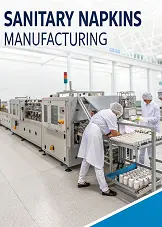
Adhesive sanitary napkins are a basic consumer item that is directly linked to the health, dignity, and productivity of women, and, of course, the bas...
|
Capacity : 90,000 Pkts. Per Day |
Plant and Machinery cost: 378 |
|
Working Capital : N/A |
Rate of Return (ROR): 31 |
|
Break Even Point (BEP): 54 |
TCI :
|
|
Cost of Project : 894 |
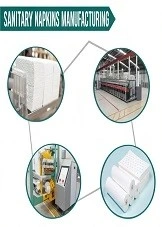
The field of feminine hygiene is a very vibrant space where new ventures and start-ups have a wide scope of making a real difference in society, besid...
|
Capacity : 30,000 Pkts. Per Day |
Plant and Machinery cost: 371 |
|
Working Capital : N/A |
Rate of Return (ROR): 29 |
|
Break Even Point (BEP): 51 |
TCI :
|
|
Cost of Project : 607 |

Entrepreneur India, an Industrial monthly magazine on industrial development, technologies & project opportunities aims at simplifying the process of choosing the suitable project for investment.

Entrepreneur India - Copyright 2017-. All rights reserved.



