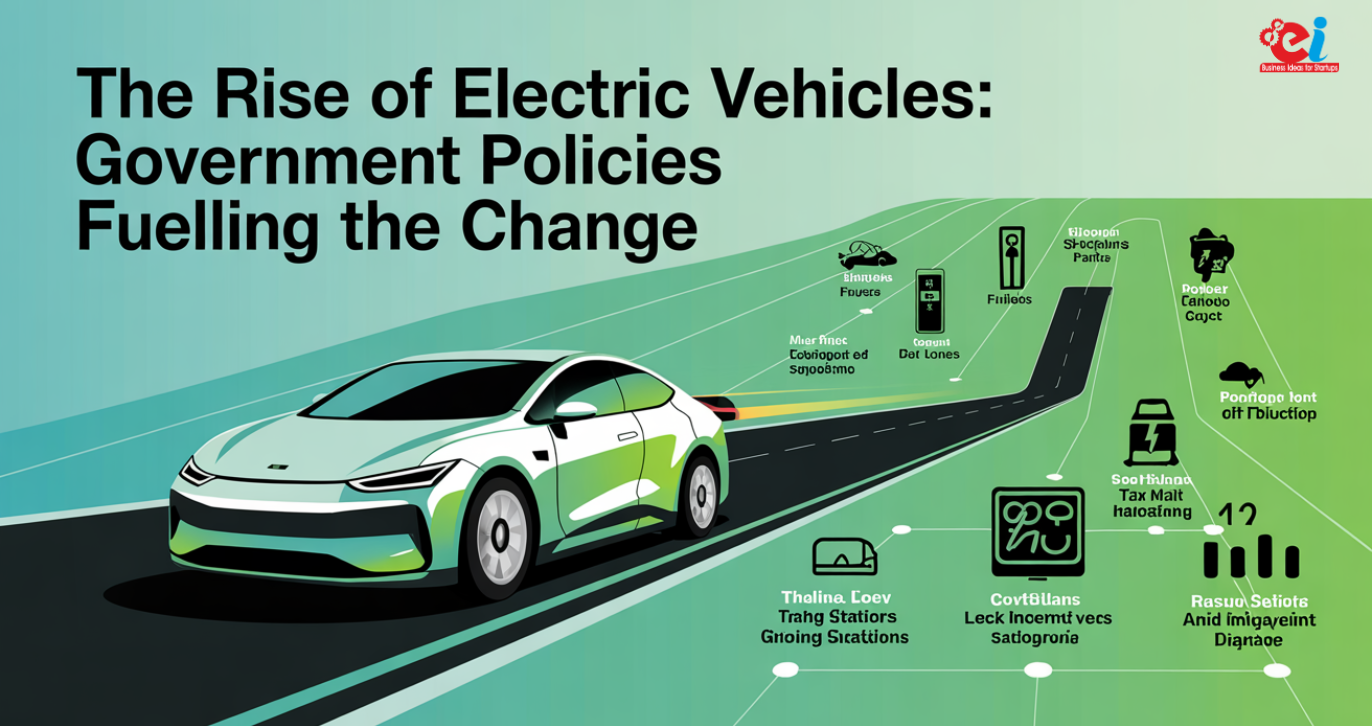






Electric vehicles (EVs) revolutionize the transportation industry. Climate change and sustainability have become the focus of discussions around the globe. There are policies to hasten the transition to cleaner and more efficient electric mobility solutions from their internal combustion counterparts. This article examines how government policies promote the electric vehicle with the future of EV acceptance across the globe.
Need for Electric Vehicles
Thinking globally, the transportation sector is considered among the greater contributors to greenhouse gases caused by humans.
Gasoline and diesel vehicles are generally referred to as ‘conventional vehicles’ due to the very toxic emissions they give off, causing air pollution and inducing a change in the climate.
The birth of the electric vehicle (EV) is a possible solution toward cleaner, sustainable modes of transportation.
Financial incentives are still the mainstay of the government’s methods to promote the adoption of EVs, like-
- In the United States, the federal government supplied tax credits up to $7,500 for EV buyers.
- In the European Union, several EU nations are granting direct subsidies, tax deductions.
- The Chinese government is having a vigorous subsidy program that reduces the EV upfront cost by any means possible.
All these incentives lessen the cost of buying EVs, which makes it attractive to consumers and thereby increases demand.
Investments in Charging Infrastructure
The biggest reason why electric vehicles do not pick up fast is lack of a charging infrastructure. Massive investments have been made by governments across the globe into networks.
It would create EV charging units to calm the fears of range anxiety and allow for long travel. Some of the most critical examples include
- Passing the US Bipartisan Infrastructure Law for $7.5 Billion for EV charging stations.
- Under the European Green Deal, millions of public chargers must be installed around Europe.
- Building the National Charging Network of China—by many counts, one of the largest EV charging infrastructures in the world.
Such investments are, in the end, just what is required to make EVs truly applicable in day-to-day living and smooth the transition from fossil fuels.
Stricter Environmental Emissions Regulations
To promote the adoption of cleaner vehicles, Governments are imposing stringent emissions regulations. Some compelling regulatory measures include
- The Internal Combustion Engine (ICE) Vehicle Ban- Norway, UK and Canada are entertaining outright eliminations of ICE vehicles by 2035 or earlier
- Corporate Average Fuel Economy (CAFE) Standard-Changes to the regulation increase in fuel-efficient and electric vehicles required for market to comply with the increasingly stringent requirements for fuel economy
- Zero Emission Vehicle (ZEV) Mandates– Regions like California-where a percentage of EV sales must be attained by the automaker, effectively pushing the industry towards electrification.
These all the policies guarantee that the automaker will receive benefits from the production and sales of EVs, including offsetting those from the production and sales of gasoline-powered vehicles.”
Funding for Research and Development
Governments also support the EV revolution through funding research and development (R&D) programs. Battery technologies, energy efficiency, and manufacturing processes must be advanced so that EVs can be competitive. The R&D investments include:
Battery Technology Innovations: Government-sponsored research into solid-state batteries, faster chargers, and longer-range EVs.
Renewable Power Connection: Today, charging EVs to renewable energy sources such as solar and wind has become very popular.
Collaborating With Car Manufacturers: Most governments have partnered with car manufacturers to advance EV technology jointly by producing subsidies for the establishment of production plants.
Visit this Page for More Information: Start a Business in Electric Vehicle Industry
Global Adoption Trends
Globally, this drive toward the adoption of EVs is fast catching on, with certain regions making leadership strides:
Europe: Several countries, including Norway and the Netherlands, boast considerable EV penetration levels in their national populations owing to substantial incentives and a highly developed charging network.
China: The world’s largest electric vehicle market continues dominating sales and infrastructure development modalities in the electric vehicle segment. United States: Prospects for further electric vehicle growth soon rest on accentuated investments and state-level mandates.
Existing Challenges and the Way Forward
The road is still long despite all that has been achieved. Major challenges to achieving mass adoption of EVs include:
High Initial Cost-from subsidies, EVs are deemed costly compared to gasoline cars in many parts;
Insufficiency of Charging Infrastructure in rural areas makes it impossible for some people to travel great distances;
Battery Supply Chain Shortages-the demand for raw materials such as lithium and cobalt is increasing in the world, and this creates issues of sustainability and cost.
Governments and industry leaders must hence continue to find avenues to collaborate on these challenges so that EVs become mainstream in the transport mode.
Closing Thoughts
Now electric vehicles have become a reality rather than being futuristic ideas: they are gradually transforming the whole transportation landscape. Without doubt, while pushing government policies such as financial incentives, infrastructure establishment, and emission restrictions, it also accelerates the adoption of EVs. Further developments in technology and an increase in global sustainability will soon lead electric vehicles to become the dominant form of transport. The movement toward electric mobility is not only an inevitable environmental need; it is an economic and technological revolution that will define the future of transport for generations to come.