





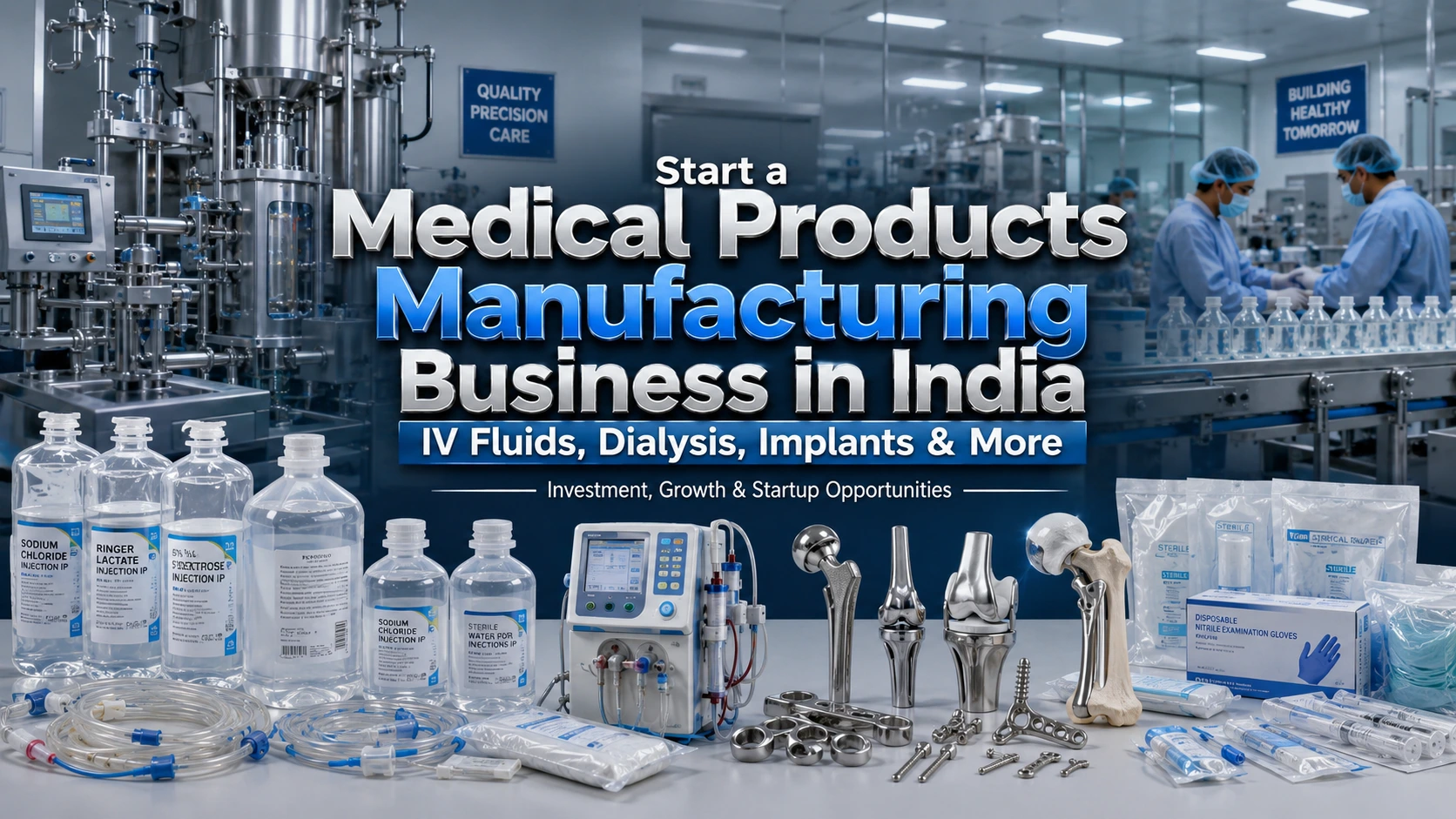
Why Healthcare Manufacturing Business in India Most Investable Sector Right Now
India’s healthcare sector is undergoing a metamorphosis. The media all but ignores the entrepreneurial activities in medical products manufacturing, despite the fact that this is the most profitable and lucrative reality for those actually working on the ground. Currently, the country relies on over 70% medical devices of high value which are imported. That is not a challenge to the supply. For the informed investors and manufacturers, it’s a wide-open business ideas opportunity. (Source: India Brand Equity Foundation — Healthcare Sector Overview)
The government is awake to dependence on imports, the hospital industry is growing 15 per cent a year, and the population of 1.4 billion is being affected by an increasing disease burden – and the opportunities for manufacturing investment have never coincided so well in decades. Policy landscape of Production Linked Incentive (PLI) scheme for medical devices, Pradhan Mantri Jan Arogya Yojana (PM-JAY) to boost hospitalisation volumes and the National Medical Devices Policy 2023 that actively incentivises domestic manufacturers help create a policy framework.
Twelve high-potential sectors in the healthcare manufacturing industry are discussed in this guide. Both are looked at through the lens of a first-generation entrepreneur or MSME investor – what you’re going to make, how you’re going to make it, how much it will cost you, who will be buying it and where are the markets going.
Market Size Snapshot — Key Healthcare Product Segments in India (2023–2024)
| Product Segment | Market Size (India) | CAGR | Primary End-Users |
| IV Fluids | ₹4,200 Cr | 9.2% | Hospitals, Clinics, ICUs |
| ECG & Ultrasound Gel | ₹380 Cr | 11.4% | Diagnostic Labs, Hospitals |
| Blood Bags | ₹620 Cr | 8.7% | Blood Banks, Trauma Centres |
| Surgical Items | ₹9,800 Cr | 12.1% | OTs, Hospitals, Clinics |
| Dental Materials | ₹2,100 Cr | 13.5% | Dental Clinics, Hospitals |
| Orthopedic Products | ₹6,500 Cr | 14.8% | Ortho Hospitals, Sports Med |
| Dialysis Products | ₹3,200 Cr | 16.2% | Dialysis Centres, Hospitals |
| Infusion Sets | ₹2,800 Cr | 10.3% | Hospitals, Home Care |
| Medical Devices | ₹15,000+ Cr | 15.6% | Multi-Specialty Hospitals |
| PPE Kits | ₹3,500 Cr | 18.4% | Healthcare, Industrial |
| Oxygen Systems | ₹5,800 Cr | 17.1% | ICUs, Home Care, Industry |
1. IV Fluids — The Lifeline of Every Hospital Ward
What They Are and Why They Matter
Almost all hospitalised patients receive some type of IV fluids, whether for hydration, for electrolytes or for their medication, or for some form of nutrition. Basic products in ICUs, surgical wards and emergency departments are normal saline, Ringer’s lactate, dextrose solutions and potassium chloride preparations. Indian hospital admissions are increasing by 12-15% per year making the need for IV fluid structurally certain.
The value of Indian IV fluid market is estimated around ₹4,200 crore and is increasing at a rate of nearly 9–10% annually. These are the markets where there are a number of large players such as Baxter, B. Braun, ICU Medical, Claris Injectables, and Denis Chem Lab. But there is significant demand in hospital markets in tier-2 and tier-3 — which are the areas of opportunity for new players.
Manufacturing Essentials
The production of IV fluids is a pharmaceutical production process. It needs to be filled and sealed in a Class 10,000 (ISO 7) clean-room environment. The raw materials are used as follows: Water for Injection (WFI); Sodium chloride BP; Dextrose monohydrate; Potassium chloride; Lactic acid. The manufacture procedure includes:
- Artificial preparation of WFI by multi-column distillation
- The process of formulation in stainless steel manufacturing vessels
- Filtration and filling into flexible PVC bags or PE bottles in a sterile manner
- Filtration of the water supply and disposal of waste.
- Sterility, pyrogen, particulate matter testing performed to ensure quality items
The cost of the plant and machinery is in the range of ₹ 8-12 crore per month for medium scale plant (5 lakh bags per month) and the civil works cost will be ₹ 3-4 crore per month. The manufacturing cost of the bag (NS/RL) at scale is approximately ₹18-24 per 500 mL bag. The selling price to hospitals is between ₹35 to 60 with an operating margin of 20-30 percent for the licensed manufacturers.
Regulatory Requirements
IV fluid manufacture must be done from a Schedule M GMP compliant facility, a Drug Manufacturing Licence under the Drugs and Cosmetics Act and usually WHO-GMP for government programme supply. Central Drugs Standard Control Organisation (CDSCO), under the Ministry of Health and Family Welfare, is the main regulatory authority.
Get Detailed Project Report (DPR): IV Fluids and Intravenous Solutions Guide
2. ECG Gel & Ultrasound Gel — Small Product, Significant Margins
The Product Pair That Runs on Repeat Consumption
Gels used in the diagnostic lab, hospital or clinical setting for ECG and ultrasound are applied in massive amounts. It requires these gels for all ECG tests, all ultrasound scans, all physiotherapy sessions involving electrical stimulation and more. The number of diagnostic imaging centres has increased from a mere 10,000 in 10 years to more than 40,000 today in India. However, ECG is now routinely used in most health check-ups. When taken together, the market is much bigger than it appears to be.
ECG gel is a conductive water-based solution. The formulation of ultrasound gel is similar, except that it contains more water and has the correct acoustic impedance characteristics to match human tissue. The products are both non-sterile, and do not need any complicated pharmaceutical manufacturing set up, and their raw materials costs are both relatively low. This association renders them as perfect enterprise concepts for MSME scale entry.
Commercial Viability
The economics of gel production is very attractive. The basic production setup with the capacity of 5,000 kg/day can be developed with fixed capital of ₹60–90 lakh. Raw material cost is about ₹28 – 35 per kg while the finished product wholesale rate is about ₹80 – 150 per kg, retail and institutional rates are much higher.
The actual benefit to this is distribution. Most other hospital consumables have the same customer base as gel products. A company that establishes relationships in the hospital supply industry can sell gels as a subsidiary business. Yet another possible entry pathway is private label manufacturing for successful established diagnostic manufacturers.
3. Blood Bags — Critical Infrastructure for India’s Transfusion System
Demand That Cannot Be Substituted
Every year, the blood bank network of India receives over 12 million units of blood. Primary collection bag is needed for each unit of whole blood collected. In addition, the transition to component therapy, now distributed in tertiary care, has increased the number of bags that are needed at each donation event from one bag to three or four. As a result, the growth in demand is of a structural nature.
Blood bags are a multi-layer and PVC complex product, which are filled with an anticoagulant-preservative solution during manufacture. The manufacturing process is conducted in a cleanroom, and involves PVC film calendaring, bag welding (high-frequency or thermal), tubing assembly, solution filling and ethylene oxide or gamma sterilisation.
Market and Investment Reality
Blood bag market is valued to be about ₹620 crore and expanding with annual growth rate of 8–9% owing to the growth of infrastructure of blood banks under the National Blood Policy. The companies involved are HLL Lifecare, Span Healthcare and a few local manufacturers. The first hurdle is regulatory, for new entrepreneurs, the blood bags are class C medical devices and need BIS certification under the Medical Devices Rules 2017. The cost of a complete manufacturing facility is ₹5 – 8 crore.
4. Surgical Items — A ₹9,800 Crore Market with Hundreds of Entry Points
The Breadth of the Category
The variety of ‘surgical items’ is vast – from basic cotton gauze to specialised instruments for laparoscopy, sutures, sterile gloves, drapes and trocar systems. It’s the challenge and the opportunity for a first-time manufacturer. The size of the unit to manufacture gauze dressings is very different from the size of the plant to manufacture absorbable sutures or laparoscopes staplers.
The surgical consumables market is valued at around ₹9,800 crore and has been growing at a rapid pace in two segments: surgical single use drapes and gowns (with annual growth of 15% due to infection control protocols since the onset of COVID-19) and minimally invasive surgical accessories has seen annual growth of 28% due to an increasing number of laparoscopic procedures carried out. India has a significant dependence on the imports of surgical products from China, Germany and the USA.
Manufacturing Pathways
The MSME entrepreneur has open doors such as:
- Non-woven surgical drapes and gowns — investment: ₹1.5-3 crore
- The price of cotton gauze & dressings is ₹1-2 crore per investment.
- Investment for Examination gloves (nitrile/latex): ₹2-4 crore
- Surgical face masks: Investment required – ₹1.5–2.5 crore
- Sutures are manufactured in this segment, investment in this segment is in the range of ₹6 – 12 crore with operating margins of 25 – 35%.
Regulatory requirements are product class specific. Non-sterile items such as fabric can be only BIS certified. For full CDSCO licensing, the surgical implants and Class C devices are to be manufactured as sterile medical products. GeM (Government e-Marketplace) Registration offers huge advantages for manufacturers that aim to win government tenders.GeM (Government e-Marketplace) Registration offers a great deal of advantages to those manufacturers, who wish to win government tenders by directly accessing the government hospital purchasing systems.
5. Dental Materials — India’s Fastest-Growing Clinical Consumption Category
The Oral Health Opportunity
There are about 1.5 lakh Registered Dentists in India and dental clinics are expanding at 18–20% in the urban and semi-urban markets. Currently, the dental materials market is valued at ₹2000 crore and is expected to see 13-14% growth annually. Growth drivers are a significant increase in the number of dental clinics, dental chains such as Clove Dental and Sabka Dentist, and an increase in the demand of cosmetic dentistry among the age group of 25-45.
Most dental materials in use in India are currently imported — from GC Corporation (Japan), Dentsply Sirona (US), and Ivoclar Vivadent (Liechtenstein). It makes domestic manufacturers with the capability to invest in chemistry-based production processes highly competitive in being able to capitalize on import substitution. Products involve composites, bonding agents, impression materials, dental cements, prophy pastes, whitening agents, root canal sealers and lab casting alloys.
Manufacturing Considerations
Industry for dental material production demands the precision mixing and packaging machinery, chemistry knowledge, and the licensing of the devices by CDSCO for regulated products. For a mid-scale plant with two or three product lines it takes ₹2-4 crore of fixed capital. The business model is B2B (supplier of dental distributors, chains and colleges), and once the relationship has been built, the customer lifetime value is high.
Explore This Book: Drugs & Pharmaceutical Technology Handbook
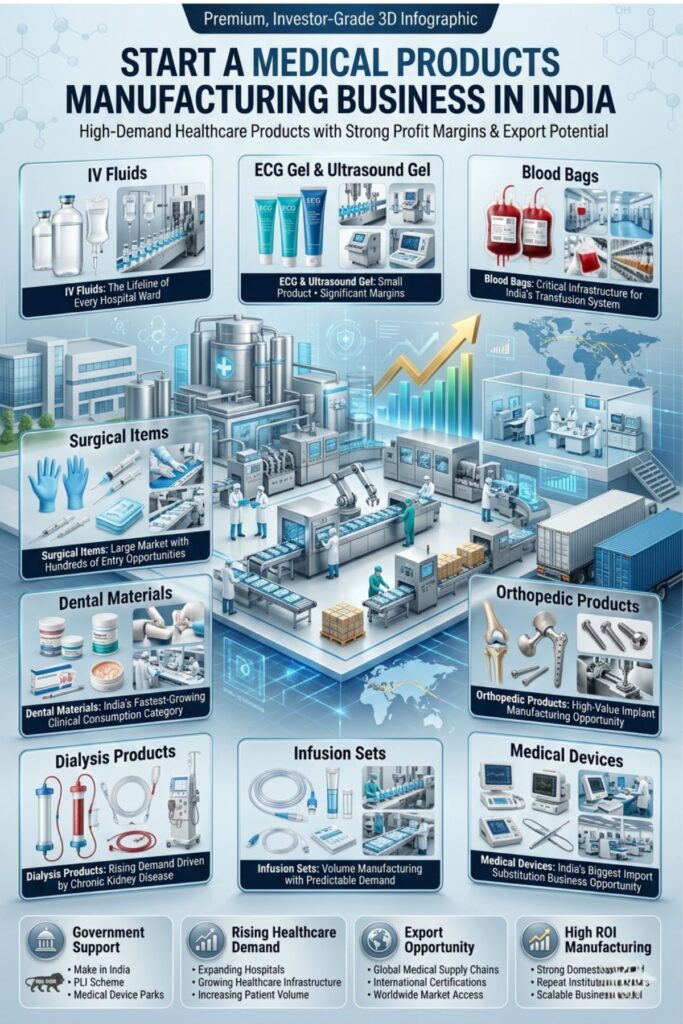
6. Orthopedic Items — The High-Value Implant Opportunity
India’s Bone and Joint Economy
India experiences more than 2.5 million orthopaedic surgeries per year, with the number of surgeries rising at 15–17% annually, due to an ageing population, growing sports injuries in the working population and the introduction of health insurance packages. The Indian orthopedic implant market is worth ₹6,500 crore and is expected to reach ₹14,000 crore by 2028.
India is also becoming a destination of choice for cost-effective joint replacement surgeries, with patients from the Middle East, Africa and South Asia travelling to India for the surgery at a reduced cost. With this, Indian manufacturers of orthopedic implants become competitive with the rest of the world, provided they are able to uphold quality standards.
Manufacturing Process and Investment
Orthopedic implant manufacturing is a precision machining company. The main raw materials include titanium alloy (Ti-6Al-4V) and stainless steel 316L, which are treated using CNC machining, surface treatment and passivation. The cost of a basic trauma implant plant (screws, plates, nails) is ₹8–15 crore, which involves the purchase of CNC machines, quality testing equipment, and clean room packaging.
A clear lesson for established Indian companies such as Adler Mediequip and Harmonic Biotech is to begin with simple, lower complex trauma implants with high volumes. Develop relationships and systems in the hospital. Then go up to joint replacement systems with margins much higher.
7. Dialysis Products — Riding India’s Chronic Kidney Disease Wave
A Market Built on Medical Necessity
Chronic Kidney Disease (CKD) is an epidemic in India. It is estimated that 7-8% of the total adult Indian population have some form of kidney disease and the number on dialysis increases by 10-12% every year. The Pradhan Mantri National Dialysis Programme has set up dialysis centers in all the district hospitals nationwide. There have been many other private dialysis chains that have also been expanding at a very aggressive pace that keeps increasing the demand for dialysis consumables.
A minimum of one haemodialysis session, three times a week — usually throughout the patient’s life — requires one haemodialysis set (blood tubing) and one haemodialysis filter (dialyzer). The dialysis products segment is one of the fastest growing medical products markets, valued at ₹3,200 crore and growing at a rate of ~16% per year, as the patient population is increasing and largely captive.
Commercial Landscape
Manufacturing of a Dialyzer involves complex technology and requires facilities to produce hollow-fibre membrane. But for MSME manufacturer, it is easier to establish a unit for dialysis concentrates. Production of Bicarbonate and acid concentrate necessitates food grade chemical processing equipment’s, endotoxin and purity testing and CDSCO license. Initial investment in a concentrate unit ranges from 1.5-3 crore. As the consumption of concentrate is very frequent it leads to high margins.
8. Infusion Sets — Volume Manufacturing with Predictable Demand
The Disposable That Every Hospital Buys Every Day
An infusion set is a combination of tubing and a needle which is inserted into a vein of a patient to deliver fluids or medications through the vein. It is a one of the most consumed hospital consumables in India. A 500-bed hospital uses 1,500–2,000 infusion sets per day. Imagine that across India’s 70000 hospitals and nursing homes the scale gets multiplied.Imagine that across 70000 hospitals and nursing homes in India the volume numbers get multiplied.
Infusion set manufacturing uses extrusion of PVC tubing, moulding of various components, cleanroom assembly, and ethylene oxide (ETO) sterilisation. The cost for the mid scale plant (20-30 lakh units/month) is mainly about ₹4-7 crore and covers the ETO steriliser. The market for infusion sets is around ₹2,800 crore and expanding at a rate of 10% each year. For MSMEs, the differentiation can come from using infusion sets that are free of DEHP or infused with safety features like anti-free flow valves and needleless connectors, which can offer a price premium and thereby provide some insulation from commodity manufacturers.
9. Medical Devices — India’s Biggest Import Substitution Business Opportunity
The Scale of the Gap
The Indian medical device market is estimated to be at more than ₹90,000 crore in 2023–24, with the import market accounting for over 80% of market volume. The government has responded with the
The government has recognised it as a strategic weakness and has come up with the PLI scheme for medical devices, which provides incentives of up to ₹3,420 crore for domestic manufacturers. In the Indian states of Andhra Pradesh, Telangana, Uttar Pradesh and Tamil Nadu, medical device parks are now providing plug-and-play infrastructure and fiscal incentives to manufacturers residing within the parks.
The National Medical Devices Policy 2023 highlights that by 2047, it is required to bring the import dependence of medical devices below 30%. Actionable segments for the MSME entrepreneur are patient monitoring accessories (SPO2 probes, ECG cables), diagnostic test kits, surgical instruments and hospital furniture. The investment amount taken to enter the industry is from ₹1 crore for simple equipment to ₹15 crore for complex diagnostic equipment.
Success Stories from Indian Medical Device Manufacturing
Rajiv Nath, Managing Director of Hindustan Syringes & Medical Devices (HMD), set up one of the biggest auto-disable syringe manufacturers from an Indian origin. His key strategic approach: to invest in ISO 13485, WHO-GMP and CE certification, before the competition. The outcome was a combined access to government tenders and export markets. The message of the lesson is simple: Regulatory compliance isn’t overhead. A market access investment that establishes long-lasting competitive barriers.
Likewise, Suresh Vazirani, founder of Transasia Bio-Medicals, found that all the diagnostic laboratories in the country were totally dependent on foreign Analysers manufactured in Europe and Japan. Instead of selling these products, Vazirani opted to produce Indian alternatives using technology collaborations, and eventually, developing products using their own research and development efforts. Today, Transasia is one of the biggest IVD firms in the Asian region. The model is to be: identify a large import dependent segment, identify a route of technology access, and create a product that is cost competitive, service localised, and locally developed.
Related Article: Top 20 Medical Devices Manufacturing Business Ideas
10. PPE Kits — From COVID Emergency to Permanent Industrial Category
The New Normal in Infection Control
PPE became a standard category in need and was forced to become a mainstream product because of COVID-19 pandemic. In pre-pandemic days, India had very little capacity to manufacture PPE, about 3 lakhs in a year. By the mid of 2020, it had increased to 5 lakh per day. It’s been a bit calmer now from pandemic levels, but the demand has become a new normal.
Coveralls, gowns, nitrile gloves, N95 and surgical masks, face shields, goggles, shoe covers and head covers are included in PPE kits. In addition to the PPE industry in healthcare, the PPE industry has evolved into various other markets, including pharmaceutical manufacturing, chemical plants, food processing, construction, and laboratory environments, giving it a diversified demand base that makes it less vulnerable to slowdowns in specific sectors.
Manufacturing and Market Dynamics
Spunbond-meltblown-spunbond (SMS) non-woven fabric is the material used for making PPE gown and coverall, which is processed by pattern cutting and ultrasonic sealing. The manufacturing of basic covers can be started with a capital of ₹80 lakh to 1.5 crore, which is one of the easiest avenues in the healthcare manufacturing sector. Dipping lines and vulcanisation machines are required to manufacture gloves, and capital investment for commercial scale production is ₹20–50 crore.
The PPE market in India is estimated to be worth of ₹3,500 crore and expanding at 18% per year. Realisations for MSME manufacturers could skyrocket when they sell PPE in regulated markets with CE or FDA quality certification as opposed to domestic B2B supply.
11. Oxygen Systems — The Infrastructure Investment India Still Needs
From Crisis to Category
The second wave of the COVID-19 outbreak in 2021 brought the need for oxygen to the fore, revealing an alarming deficit in the country. The biggest single move to boost medical oxygen infrastructure in the country was the installation of PSA oxygen plants by the government in more than 1,500 hospitals, funded by PM CARES. It also generated new manufacturing and servicing opportunities.
The oxygen systems market ranges from industrial and medical oxygen cylinder manufacturing and refilling to oxygen cylinder plant manufacture for PSA plants, liquid oxygen storage systems, home use oxygen concentrators, oxygen therapy accessories (masks, flow meters, humidifiers and nasal cannulas), and hospital oxygen pipeline systems. The market is worth ₹5,800 crore and would be worth ₹13,500 crore by 2028 at a CAGR of around 17%.
Business Opportunities Across the Value Chain
The assembly of the oxygen concentrator is an intriguing business opportunity for the MSME businessman. The capital cost of the medical-grade concentrator based on molecular sieve (zeolite) technology is ₹1.5 to 3 crore for 2,000 units per month in which the compressors, valves and control systems are imported. The market for home oxygen therapy has been increasing at a compound annual growth rate of 22-25% owing to the increasing prevalence of respiratory diseases, COPD and post-COVID lung complications.
PSA oxygen plant installation and maintenance is a service intensive business to business transaction whose main differentiator is technical expertise. Some companies have developed recurring revenue business models using the method of installing plants and charging annual service fees of ₹3–8 lakh for a few 10–15 years. PM-ABHIM pipeline of new hospital constructions is a huge order book for the oxygen system suppliers.
Discover business ideas that actually make money
Indicative Cost Structure Comparison Across Key Healthcare Products
| Cost Head | IV Fluids | ECG/US Gel | Blood Bags | Surgical Items |
| Raw Materials | 45–52% | 35–42% | 48–55% | 40–48% |
| Energy & Utilities | 8–12% | 5–8% | 6–9% | 7–11% |
| Labour | 10–14% | 12–16% | 10–14% | 12–18% |
| Packaging | 8–12% | 10–14% | 7–10% | 8–13% |
| Regulatory & QC | 4–6% | 3–5% | 5–7% | 4–7% |
| Overheads & Admin | 6–9% | 5–8% | 5–8% | 5–8% |
| Net Operating Margin | 14–20% | 18–25% | 16–22% | 15–22% |
Growth Outlook: Healthcare Manufacturing Segments — India 2023–2028
| Product | 2023 Market (Cr) | 2028 Forecast (Cr) | Growth Driver |
| Dialysis Products | 3,200 | 7,800 | CKD epidemic, govt. dialysis scheme |
| Orthopedic Implants | 6,500 | 14,200 | Sports injuries, geriatric population |
| Medical Devices | 15,000 | 38,000 | Make in India, import substitution |
| PPE Kits | 3,500 | 8,100 | Permanent infection control norms |
| Oxygen Systems | 5,800 | 13,500 | Home healthcare, post-COVID infra |
| Dental Materials | 2,100 | 4,900 | Dental tourism, urban awareness |
| IV Fluids | 4,200 | 7,000 | Hospital expansion, ICU growth |
| Infusion Sets | 2,800 | 4,900 | Home infusion, outpatient growth |
Feasibility Assessment and Project Planning: The Role of NPCS
So, for entrepreneurs contemplating over these kinds of products, feasibility study is something that will take care of the disparity between opportunity and execution reality. The Niir Project Consultancy Services (NPCS) is one of the renowned project consultancy and industrial information services provider in India. It aids the entrepreneurs, investors and MSMEs in identifying, studying and setting up manufacturing projects over diversified industries ranging from Healthcare to Medical Products.
Market Survey cum Detailed Techno-Economic Feasibility Reports are published by NPCS, and these provide the entrepreneurs a composite and ready project to be conceived with information ranging from:
- The sequential manufacturing process along with equipment specifics.
- Source of the raw materials required with their suppliers’ identification and rate analysis
- Plant layout and utility requirements
- Comprehensive financial projections-the initial capital required, the working capital, expected revenues and calculations of payback periods.
For a first-generation manufacturer and someone assessing several product avenues at the same time, this structured feasibility information would substantially lessen the decision-making risk and reduce project time. They work with manufacturers, industrials planners and organizations through online reports and personalized consultation on their projects.
Government Support Structures for Healthcare Manufacturing in India
India’s medical products manufacturing ecosystem is regulated by the Ministry of Health and Family Welfare and the Department of Pharmaceuticals. National Regulatory Authority for pharmaceuticals and medical devices in India is CDSCO. Medical Devices Rules 2017 classifies medical devices into Class A, B, C and D with proportional regulatory controls.
PLI scheme for pharmaceuticals and medical devices offers 5-10% financial benefits on incremental sales to eligible domestic manufacturers. Health manufacturing MSMEs also have access to priority sector lending by RBI and other loan facilities
MSMEs are also eligible for priority sector lending under RBI guidelines and can access the Credit Guarantee Fund Trust for Micro and Small Enterprises (CGTMSE) for collateral-free loans.
The GeM (Government e-Marketplace) portal offers direct access to government hospital procurement, which in many product categories represents 35–50% of total domestic demand. Registration on GeM and compliance with Atmanirbhar Bharat procurement preferences can provide a new manufacturer with a substantial initial order pipeline while they build private sector relationships.
Entrepreneurs can access policy details and scheme applications through the Ministry of Health and Family Welfare official portal, which serves as the primary reference for regulatory, procurement, and incentive-related information.
Frequently Asked Questions
Q1. What is the minimum capital required to set up a healthcare manufacturing unit in India?
It varies across products. At the lower end, one can start with an ECG/ultrasound gel manufacturing unit or PPE gown stitching with 50 lakhs to 1.5 crore. To manufacture IV fluid, blood bag, and orthopedic implants, 5 to 15 crores will be required due to clean room, equipment, and regulatory compliance factors. Medical device manufacturing capital cost varies broadly depending on the product class and technicality of the devices.
Q2. Are CDSCO registrations required for all healthcare products?
Not for all but for a majority and ever-increasing list of products. The number of notified devices requiring a license from the CDSCO, governed by the Medical Devices Rules, 2017, has steadily increased over time. Sterile products, implantable medical devices, diagnostics, and IVDs require registration in almost all cases, while non-sterile products like gauze bandages may only need BIS certification. The classification for any product being manufactured should be checked carefully by any entrepreneur designing their facility as it influences both the layout and capital required.
Q3. Which quality certifications are most crucial for healthcare manufacturing?
ISO 13485, the quality management system for medical devices, is fundamental along with ISO 9001. The WHO-GMP certification is of critical importance for manufacturers of IV fluids and pharmaceuticals when it comes to supplying government institutions and tenders, while CE marking is a must to export to the EU market. A US FDA 510(k) approval, although an expensive proposition, is essential to access the single largest medical devices market in the world. The recommended sequence of obtaining these certifications would be to initially aim for ISO 13485 and CDSCO licenses, then work towards WHO-GMP and CE marking.
Q4. Which healthcare product segments offer the greatest potential for Indian manufacturers in the export market?
Surgical instruments, orthopedic implants, PPE products, IV fluids (specifically pharma grade) and diagnostic kits all possess a ready export market from India. The cost advantages enjoyed by Indian manufacturers of stainless-steel instruments are well known globally. The markets of Africa, Middle East and Southeast Asia are important importers for India and the comparatively less strict regulatory regimes make these more easily accessible markets for starting out export business from India.
Q5. How can one get identified as a supplier to hospitals for their required products?
By listing products on GeM (for the Government institutions), approaching established medical distributors, attending important healthcare trade fairs such as MEDICAL FAIR INDIA (New Delhi) or Hospitalar (Brazil) and by directly contacting hospitals’ purchase departments, specifically that of large hospital chains such as Apollo, Fortis, Narayana Health, and Max Healthcare. Securing any of the last three gives not only the advantage of volume but also high visibility across a large number of its outlets.
Q6. What are the working capital requirements in healthcare manufacturing?
Healthcare manufacturing inherently involves moderate to high working capital. Hospital buyers require up to 60-90 days of credit. Furthermore, there is a quarantine period required to complete sterility tests on all sterile manufactured products. A general guideline to consider when calculating the required working capital is that it needs to be 25-35% of projected annual turnover for most hospital consumable business and could be up to 40% for items with long sterility quarantine cycles.
Q7. Is this sector recommended for a first-generation entrepreneur without medical expertise?
Yes, but it is imperative that a smart investment be made in technical and regulatory know-how. It’s possible to outsource manufacturing know-how with a good number of experienced production managers from both pharmaceutical and medical device companies readily available in India’s metro cities. The entrepreneur needs business development skills, capital access, and managerial experience. The most successful first-generation entrepreneurs in the medical devices business are invariably business-minded generalists who have managed to hire and retain excellent technical and regulatory teams around them.
Conclusion: The Decade of Indian Healthcare Manufacturing
The opportunity universe discussed in this guidance paper is not imaginary. It is predicated upon a range of structural demand drivers-demographic (aged population, disease burden), policy-led (PLI, PM-ABHIM, import substitution dictates), and economic (government & individual health expenditures) in nature. All products outlined above collectively form a market worth more than ₹ 55,000 crore within India alone, with individual products growing more rapidly than the Indian economy.
The attribute that separates successful enterprises from those that fail within the industry is not availability of funds or technical know-how (which is more prevalent today than it ever was). It is the discipline in decisions-selection of the appropriate point of entry, through feasible evaluation, investment in compliance & quality systems from inception, deliberate building of distribution partnerships and the financial patience to endure lengthy institutional purchase cycles. India’s claim to a status of a emerging global centre for low cost & high-quality health care manufacturing is tangible & driven by policy imperatives. The 2020’s will probably be looked upon as a period where Indian manufacturing finally ‘matured’ and with-it opportunities within the Indian health care industry. Such commercial gains for the entrepreneur will match the country benefits


