







Gujarat Industrial Policy
A State That Attracts ₹24,716 Crore in Three Months — While Most Founders Are Still Watching
Ninety-three manufacturing plants. The average number of new industrial units which are registered at the Gujarat Industries Commissioner’s office every week. That’s a pretty hard exaggeration for most entrepreneurs to take in unless they’re outside the state. It isn’t.
Gujarat was the top destination for fresh investment, attracting ₹24,716 crore between October and December last year, of which ₹23,699 crore was in Ahmedabad. Gujarat was the third most preferred state among all the states for FDI equity inflows in the nine months period from April to December last year, with the total inflow of ₹44,041.7 crore, according to the Department for Promotion of Industry and Internal Trade (DPIIT). The state has attracted foreign investment worth of ₹3,91,613 crore over 25 years.
These are no legacy numbers of the past when there was no competition in Gujarat. This is happening now — at the time when other states are also rolling out their incentives and at the time of a deep restructuring of the global supply chain that is bringing manufacturing investment to India that has never been.
The reason? Gujarat simply has redefined who will receive state support – and what is arguably the most generous offer any Indian state has made to the MSME manufacturers in recent times is the new industrial policy that is expected to come into full effect soon. If you’re considering the placement of your plant, this article will provide you with all the information you need.
Get Detailed Project Report (DPR): Gujarat Business Opportunities Guide
The Gap That Makes This Moment Urgent
The manufacturing base of MSME in India is structurally weak in terms of the number of manufacturing units in a limited number of corridors. The ministry of MSME’s Annual Report reveals that more than 60% of the registered manufacturing MSMEs are present in five states, namely Maharashtra, Tamil Nadu, Uttar Pradesh, Gujarat and West Bengal. Twenty-three other states and union territories are poorly served.
In Gujarat alone, the Gujarat Industrial Development Corporation (GIDC) has identified 202 industrial estates in the state, but the investment is lop-sided with Ahmedabad, Surat, Vadodara and Rajkot having the bulk of the industrial activity. Although there is land, labour and raw material proximity, the districts like Dahod, Narmada, Chhota Udaipur and Morbi are still under-industrialised.
This is the spot the new policy looks to fill. The new definition of MSME, which is being implemented along with the new policy, will increase the investment limit to ₹2.5 crore for micro industries, ₹25 crore for small industries and ₹1.25 lakh crore for medium industries. It has doubled the turnover thresholds for all micro, small and medium businesses to ₹10 crore, ₹100 crore and ₹500 crore, respectively. These changes are aimed at bringing more businesses into the ambit of higher incentive slabs as the costs have increased with inflation, stripping away the incentive value of the previous rates, KNN India reported.
The need for import dependency is urgency. India presently imports a high quantity of precision engineered components, specialty chemicals, electronics sub-assemblies and pharmaceutical intermediates from China which have Gujarat raw materials supplies, existing manufacturing clusters and port connectivity from Mundra, Kandla and Hazira.
TABLE 1: Gujarat Industrial Clusters — Sector Specialisation and Investment Potential by District
| District | Key Industrial Cluster | Primary Sectors | Taluka Category* | Incentive Tier |
| Ahmedabad | Naroda, Vatva, Odhav | Pharmaceuticals, Chemicals, Textiles | Category 3 | Standard |
| Surat | Sachin, Kim, Pandesara | Textiles, Gems & Jewellery, Chemicals | Category 3 | Standard |
| Vadodara | Waghodia, Savli, Padra | Petrochemicals, Engineering, Auto Components | Category 3 | Standard |
| Rajkot | Aji, Shapar-Veraval | Engineering, Brass Parts, Castings | Category 2/3 | Enhanced |
| Bharuch/Dahej | PCPIR Zone, Dahej SEZ | Chemicals, Petrochemicals | Category 1/2 | Highest |
| Morbi | Morbi GIDC | Ceramics, Tiles, Sanitary Ware | Category 2 | Enhanced |
| Mehsana | Mehsana GIDC | Auto Parts, Dairy Equipment | Category 2 | Enhanced |
| Dholera | Dholera SIR | Electronics, Semiconductors, Defence | Category 1 | Highest |
Category 1 = industrially developing (highest incentive); Category 3 = fully developed (standard incentive). Source: Invest in Gujarat — Vibrant Gujarat Portal
The Opportunity: Why the Timing Is Right
Three forces are converging at the same time — and rarely at the same time.
First of all, the policy. All these are stacked with the Aatmanirbhar Gujarat Scheme for Assistance to Industries that is currently active and is being extended and improved under the new industrial framework, which includes capital subsidies, interest subsidies, net SGST reimbursement, electricity duty exemptions and EPF reimbursements. The scheme aims to draw an investment of about ₹12.5 lakh crore, and will create jobs for more than 15 lakh people, Invest Gujarat reports.
Second is the national PLI push. Production-Linked Incentive (PLI) Scheme by the Government of India has been designed to incentivize domestic manufacturing in 14 sectors including pharmaceuticals, electronics, textiles, food processing, auto components, etc. Now under the new Gujarat policy, any sector listed under a central PLI scheme is automatically considered as a sunrise sector and can avail of a higher incentive from the state as well as the central government. This is a two-subsidy system for which most entrepreneurs have not provided a blueprint.
Third, logistics. Gujarat has 41 ports which receive around 30% of India’s total maritime cargo. In addition, the Delhi-Mumbai Industrial Corridor (DMIC) with its Dedicated Freight Corridor nodes at Ahmedabad and Vadodara provides rail freight connectivity to Delhi NCR and Mumbai within 24-36 hours with per-unit transportation cost lower than road transport for the manufacturers in central Gujarat.
The bridge to access capital is provided by the MUDRA Yojana (up to ₹10 lakh under Shishu, up to ₹50 lakh under Kishore) and CGTMSE (Credit Guarantee Fund Trust for Micro and Small Enterprises) (collateral-free credit up to ₹2 crore) for first-generation founders. The micro-unit can substantially cut down its effective equity outlay when coupled with the Gujarat level capital subsidy.
How to Set Up a Manufacturing Plant in Gujarat: Step-by-Step
Minimum Investment: In a micro-unit, the amount invested should be in the range of ₹15 lakh to ₹50 lakh in plant and machinery, along with a working capital of ₹10 lakh to ₹20 lakh. Fixed capital requirement of a small-scale unit is between ₹50 lakh to ₹3 crore.
Land and Space: GIDC provides sheds and plots in all the 202 industrial estates. A standard GIDC shed (200–500 sq. metres) costs ₹25,000–₹60,000 per sq. metre depending on location. The Ahmedabad and Surat district is 20-35% more expensive than category 1 districts like Dahej and Morbi interiors. The lease for 99 years. Apply through the official website of GIDC, www.gidc.gov.in.
Key Machinery: This is very different across sectors. When it comes to engineering components, the prices for CNC machining centres range from ₹15 lakh to ₹40 lakh per unit, press tools will be around ₹10 lakh a piece, and surface treatment equipment will be priced between ₹10 lakh and ₹10 crore each. For food processing, use the stainless-steel processing lines of the fabricators based in Ahmedabad and Rajkot, for whom the cluster effect brings machinery prices 25-35% less than the pan-India catalogue.
Internal sourcing of raw material is an asset for Gujarat. Chemical manufacturing firms are catered by chemical feedstocks from Reliance’s Jamnagar complex and GAIL’s Bharuch operations. Rajkot’s foundry belt is an excellent source for steel and castings. Surat has an ample supply of textile yarn. In respect of imported raw materials, proximity of Mundra Port (India’s largest private port by cargo volume) cut down the transit time from 10-14 days to 2-3 days compared to inland locations.
Read the Complete Book Here: Modern Technology of Industrial Chemicals
Licences and Approvals Required:
- Online and free Udyam Registration within 24 hours – Mandatory Condition to avail MSME incentives (gov.in)
- Apply for Factory Licence from the Gujarat Labour Department if 10+ workers on power and 20+ workers without power are used.
- GST Registration: If the turnover exceeds ₹40 lakh, it is compulsory; apply through gov.in.
- Consent to Establish + Consent to Operate: From Gujarat Pollution Control Board (GPCB) green category units will receive digital approval in just 7 days while 30–60 days is enough for orange/red category units.
- The products required to obtain BIS/ISI Certification – 370+ notified products (Apply through BIS Portal)
- Food Safety Standards Authority of India (FSSAI) Licence: This is mandatory for all food manufacturing units, and state licence would be applicable for those having a turnover of up to ₹20 crore.
The time frame of registration to first production is 4-6 months, if the location is a Category 1/2 location and the company has a shed with GIDC and 6-10 months if the company constructs a shed on their land and has approved production certificates by GPCB.
Team Size: Minimum of 8 – 12: 1 production supervisor, 4 – 6 skilled operators, 2 helpers, 1 quality/stores person, 1 admin-accounts person (micro-unit).
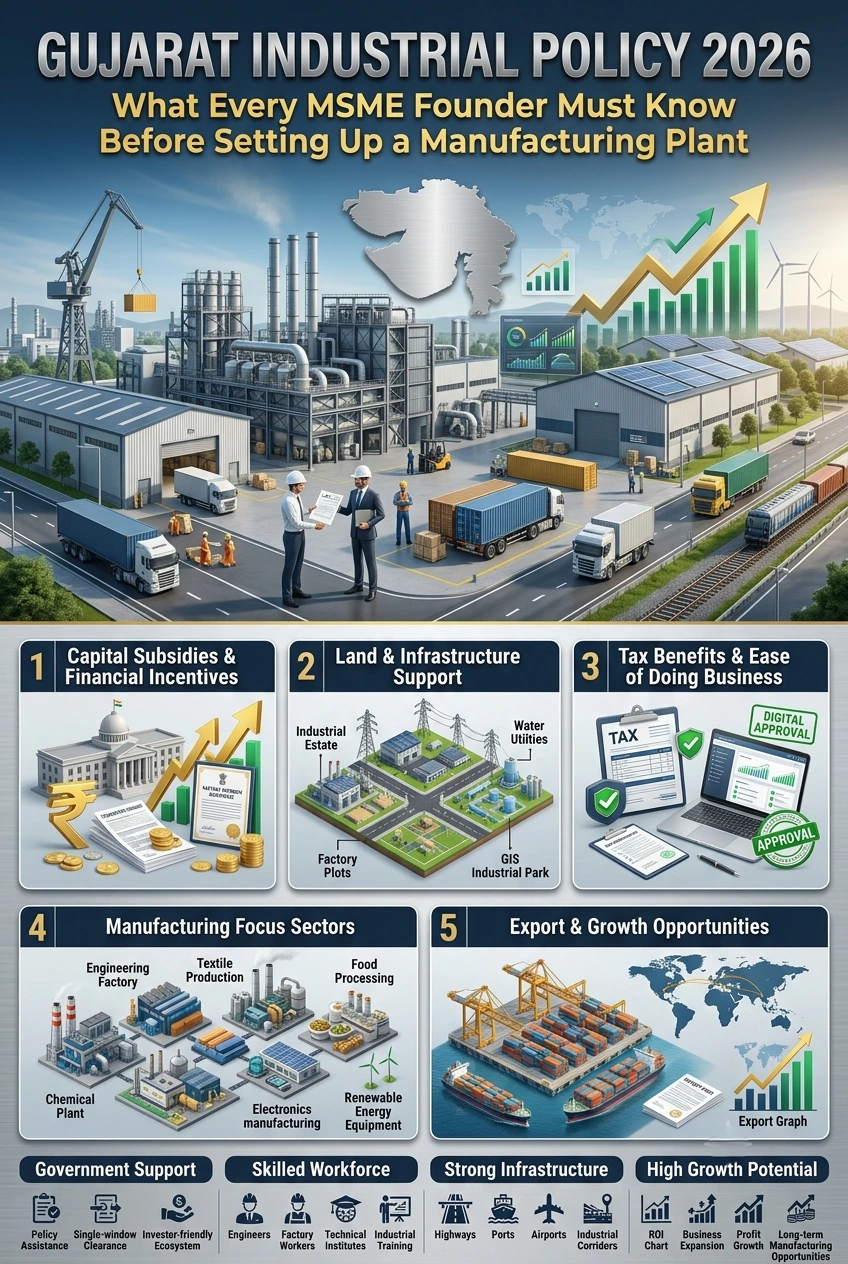
TABLE 2: Investment Breakdown for a Representative Small Manufacturing Unit in Gujarat (INR)
| Cost Head | Minimum (₹) | Optimal (₹) | Notes |
| Land / GIDC Shed (Lease Deposit) | 5,00,000 | 15,00,000 | Category 2/3 GIDC shed; 200–500 sq. m |
| Plant & Machinery | 40,00,000 | 1,20,00,000 | Primary production equipment |
| Electrical Installations | 3,00,000 | 8,00,000 | Power connection, transformers |
| Furniture, Fixtures & Tools | 1,50,000 | 4,00,000 | Shop floor + admin |
| Pre-operative Expenses | 2,00,000 | 4,00,000 | Licences, registration, consultancy |
| Working Capital (3 months) | 8,00,000 | 25,00,000 | Raw material + salaries + overheads |
| Contingency (10%) | 5,95,000 | 17,60,000 | Buffer for cost overruns |
| Total Project Cost | ₹65,45,000 | ₹1,93,60,000 | |
| Less: Capital Subsidy (est. 15–25%) | (9,00,000) | (25,00,000) | Subject to taluka category |
| Less: Interest Subsidy (over 5–7 yrs) | (5,00,000) | (17,50,000) | At 5–7% p.a. on term loan |
| Net Effective Investment | ₹51,45,000 | ₹1,51,10,000 | Post state-incentive |
Source: Gujarat Industries Commissioner MSME Incentive Guideline; Aatmanirbhar Gujarat Scheme documentation; GIDC shed rates FY25-26
Financial Snapshot
Let’s consider a small manufacturing unit in Gujarat, say an engineering component manufacturing unit with fixed capital of ₹1.25 crore.
Expenditure: From ₹65 lakh to ₹1.95 crore depending on the size of the project and the sector. Net effective outlay, excluding state subsidies: ₹51–₹1.51 crore.
Monthly Operating Costs: Staff (₹2.8–4.5 lakh), raw materials (₹8–18 lakh), power (₹80,000–2.5 lakh), rent/EMI (₹35,000–1.5 lakh), misc overheads (₹40,000–90,000). Total: ₹12-27 lakh/month at operational capacity.
Revenue Projection:
- At 60% capacity: ₹18–40 lakh per month
- At 100% capacity: ₹30–70 lakh per month
Gross Margin: 32-48% for most light engineering and processed goods categories. Net margin (full capacity): 14–22%, rising to 18–26% when subsidy receivables are realised.
Most of the financial models underestimate the cash-flow benefit for businesses that are already covered under the Aatmanirbhar Gujarat MSME scheme, in the form of net SGST reimbursement, which is 75% of the fixed capital investment for 10 years.
Payback Period: 3-5 years full capacity operation. Payback in 2.5–3.5 years would be possible with units in Category 1 talukas on maximum subsidy.
Find the most profitable startup for your investment range
TABLE 3: Applicable Government Schemes for New Manufacturing Plants in Gujarat
| Scheme | Administered By | Benefit | Eligibility |
| Aatmanirbhar Gujarat MSME Scheme | Govt. of Gujarat, Industries Dept. | Capital subsidy up to ₹35 lakh (Micro); Interest subsidy up to ₹35 lakh p.a.; Net SGST reimbursement 75% of FCI over 10 yrs | New manufacturing MSME; Udyam registered; Category-based |
| Atmanirbhar Gujarat Large & Thrust Sector Scheme | Govt. of Gujarat | SGST reimbursement 80–100% of net SGST (up to 5–8% of FCI p.a.) for 10 yrs; Electricity Duty exemption 5 yrs; EPF reimbursement ₹1,800/employee/month for 10 yrs | Investment above MSME threshold; Thrust/core sectors |
| Production-Linked Incentive (PLI) | Ministry of Commerce/relevant ministry | 4–20% incentive on incremental sales over base year for 5 years | Sector-specific; minimum investment thresholds apply |
| CGTMSE | SIDBI + Ministry of MSME | Collateral-free credit guarantee up to ₹2 crore | Manufacturing/service MSEs; Udyam registered |
| MUDRA Yojana (Kishore) | NABARD / Scheduled Banks | Loans ₹50,000–₹50 lakh at priority sector rates | Micro enterprises; no collateral for Shishu tier |
| PMEGP (PM Employment Generation Programme) | KVIC / DIC | 15–35% capital subsidy on project cost up to ₹50 lakh (manufacturing) | First-time entrepreneurs; rural/urban classification applies |
| Udyam Registration Portal | Ministry of MSME | Free registration; gateway to all MSME schemes | Any manufacturing enterprise meeting MSME thresholds |
| Gujarat Startup Policy | i-Hub Gujarat / Startup Cell | Seed funding, mentorship, 1% additional interest subsidy | Registered startup with DPIIT recognition |
Sources: ic.gujarat.gov.in; kviconline.gov.in
NPCS Services: Detailed Project Reports and Technical Consultancy
Niir Project Consultancy Services (NPCS) provides one of the comprehensive library of sector-specific project report in India for those entrepreneurs who want to take their idea from concept to financial model to plant layout with professional assistance. NPCS offers techno-economic feasibility studies, detailed project reports including capital costs, machinery specifications, raw material sourcing and financial projections, and plant layout designs for manufacturing units for 400+ industries. The reports that they make are routinely utilized by first generation entrepreneurs, term loan processors at the bank, and investors reviewing new plant proposals. Resources and commissioned reports can be found at niir.org and entrepreneurindia.co. If you are a founder making a project report for the bank to take up for a manufacturing unit in Gujarat, NPCS’s in-depth sectoral documentation can save you weeks of doing research and enhance the quality of your bank loan applications and subsidy applications as well.
Related Article: Gujarat’s ₹10 Lakh Crore New Industrial Policy: 5 Business Opportunities Every Founder Must Grab Now
The Decision in Front of You
Gujarat is not the only State providing incentives. However, at present, it is only one state that has all these advantages coupled with an incentive policy that would increase the investment thresholds for MSMEs to qualify for incentives by nearly three times.
The time to register, file for GIDC allotment and set up commercial production during the operating period of the current schemes is limited. Each quarter is a quarter that you don’t earn reimbursement credit or interest subsidy for SGST.
Next step is specific: Go to ic.gujarat.gov.in, download the guidelines of Aatmanirbhar Gujarat MSME scheme and compare the investment size and sector of your proposed and taluka category map. Contact a project consultant and register for a Udyam, if the numbers qualify, before the end of this week. Eligibility will be based on the date of commercial production, while the application process will start from loan disbursement.
Entrepreneur Spotlight
Mehul Patel, Rajkot — Precision Castings Unit
Mehul Patel started his business as a precision casting brass manufactory with a fixed capital investment of ₹85 lakh at Shapar-Veraval GIDC in Rajkot with interest subsidy on his business as per Gujarat Industrial Policy, which reduces the cost of business by nearly 6% per annum. The company is now running at an annual turnover of ₹2.8 crore and provides car parts to auto-engineering units in Rajkot and also to an export buyer from Germany. The main point he made: “Apply for GIDC shed space first, finalise your machinery second — availability of sheds in Category 2 locations dictates when you can do it, more than anything else.
Frequently Asked Questions
Q1: What is the minimum investment required to set up a new manufacturing plant in Gujarat and qualify for state incentives?
For a micro-unit under the Aatmanirbhar Gujarat MSME Scheme, investment in plant and machinery can be as low as ₹10 lakh — but the practical minimum for a commercially viable unit is ₹25–50 lakh in fixed capital. Under the revised limits in the incoming policy, micro enterprises can invest up to ₹2.5 crore and still qualify for the micro-tier incentive package, including capital subsidies and SGST reimbursement.
Q2: Which licences are mandatory before starting production in Gujarat?
At minimum, you need Udyam Registration (free, online), a GPCB Consent to Establish and Consent to Operate (timelines vary by pollution category), a Factory Licence if employing 10+ workers with power, and GST registration above the threshold turnover. Sector-specific licences — BIS, FSSAI, Drug Manufacturing Licence — apply additionally depending on what you produce. The GPCB portal provides a pre-application checklist by industry category.
Q3: Where should I source raw materials if I set up in Gujarat?
This depends heavily on your sector. Chemical and petrochemical raw materials are best sourced from PCPIR Dahej or through Bharuch-based traders. Engineering raw material — steel, brass, aluminium castings — sources well from Rajkot and Surat. Textile yarn and fabric is abundant in Surat. For imported raw material, Mundra Port’s proximity gives inland Gujarat units a 3–5 day advantage over inland locations in other states.
Q4: What is the realistic payback period for a small manufacturing plant in Gujarat?
In a properly executed Category 1 or 2 taluka unit running at 70-80% utilization level and commisoned not more than 18 months ago, payback period can range from 3-4.5 years. In the case of units situated in full development areas (category 3 – such as areas outside Ahmedabad city) with typical subsidies, payback is in the range of 4-6 years. By appropriately accounting for, and following up on SGST receivables and interest subsidies, payback period can be reduced by 6-12 months.
Q5: Which government schemes offer the most direct financial benefit for a first-generation MSME manufacturer in Gujarat?
The Aatmanirbhar Gujarat MSME Scheme is the most comprehensive — it stacks capital subsidy, interest subsidy, SGST reimbursement, and EPF reimbursement. Pair this with CGTMSE for collateral-free borrowing and PMEGP if you are a first-time entrepreneur — PMEGP provides a 15–35% capital subsidy on the project cost (up to ₹50 lakh for manufacturing), which comes before production begins. Details at kviconline.gov.in.
Q6: How can NPCS help me plan and finance a new manufacturing unit?
Niir Project Consultancy Services (NPCS) provides detailed project reports that cover capital cost estimation, machinery selection, raw material costs, process flow, and financial projections — exactly the document format that banks and MSME development institutes require for term loan appraisal. Their reports also map applicable government schemes and subsidy eligibility for specific product categories. Access their resources at niir.org and entrepreneurindia.co.
Data Sources: DPIIT — FDI Statistics | Gujarat Industries Commissioner | Ministry of MSME | Invest Gujarat — Vibrant Gujarat | IBEF Gujarat State Profile


